Global Citizen Youth Leadership

I have very briefly mentioned that I spent a few weeks in El Salvador this summer. My time there was through the work I do with PWRDF. One of our partners, the Committee against AIDS (CoCoSI), was chosen to host a delegation of young people from Saskatchewan. The trip was designed and run by the Saskatchewan Council for International Cooperation. Its purpose was, as the title “Global Citizen Youth Leadership Program” suggests, designed to promote being a global citizen amongst young people.

What does it mean to be a global citizen, you might ask. This was explored through discussions of international development – good and bad, through understanding privilege and oppression, through living and interacting with people with a different history, culture, and worldview to the ones we may have grown up with, and through being open to being changed and willing to ask tough questions to ourselves and our society.

The eight teenagers from all across Saskatchewan who joined in on this journey are amazing young people. They rose to the challenge and let their hearts be broken time and time again by shattered worldviews, poverty, pain, and love. Their experiences, and the stories of some of the people we met have been captured in a 30 minute video by a Regina filmaker.

For those of you who have not yet had the opportunity to see the video, take 30 minutes and be challenged by some amazing young people.

Passing Peace

Each time we, as a Christian community, gather to celebrate the Eucharist, we have a tradition of passing the peace. How we pass that peace can be summed up in a thread started by a friend of mine of Facebook: “Informal poll for Episcopalians (or anyone who worships in a “liturgical church”): When passing the peace, are you a hand shaker or a hugger?”

With over fifty comments on the post, it is safe to say that we are all a little divided on it and many have strong opinions. I know people who will only attend services using the Book of Common Prayer, the older prayer book, so that they do not have to even think about touching anyone. I know people who have it as their mission to hug every single person in the building before they will conclude that they have sufficiently passed peace. My own response? Well, if I know you well, I’ll give you a hug. If I’ve only just met you or I don’t know you very well, it is a hand shake.

But what about if that has to change and you can’t shake hands for some reason and you do not want to hug? Then what?

I spent July and August in El Salvador with a group of youth leaders from Saskatchewan. We were visiting a PWRDF partner there, and spent the majority of our time in a small, isolated, rural community in the highlands close to the border with Honduras. While I am always really careful about ensuring I have all of my travel vaccinations before I go anywhere, there are some things you cannot plan for and cannot do anything to prevent.

Shortly before leaving to return home, I had a bit of a fever and felt achy all over. The local doctor looked me over and decided that I didn’t need to worry about anything with regards to flying, and to visit a doctor at home if anything changed after I arrived home. For some time, nothing changed. However a few weeks after returning home I started to get really achy joints: toes, ankles, knees, hips, elbows, and fingers. Not all at once, but definitely a lot of them for a lot of the time.

After a series of blood tests (and a whole lot of blood removed from my body), we have determined that I got the chikungunya virus when I was in El Salvador. It is transmitted by mosquitoes, which is interesting since I rarely get bitten by mosquitoes. It won’t cause any permanent damage and the joint pain will subside over time – and indeed it already has a lot: walking is no longer extremely painful and I have been able to type these words – but I will be dealing with joint pain off and on for a while longer still.

What does this have to do with passing the peace, you might ask? Simply this: my hands and feet remain the most affected parts of my body. I have difficulty holding our heavy hymn books some mornings in chapel. It also means that when well-meaning people give me a nice, firm handshake of peace, my hand aches for hours afterwards.

How does one pass peace when a handshake isn’t a viable option? I have tried a number of different things, most recently putting my hands together in prayer position and slightly bowing to people when I pass the peace of God. More often than not, however, this becomes awkward for both myself and the other person. So what is one to do? While for me, the pain will soon go away, I am mindful that is not the reality for many.

Countdown

The countdown is on. In 16 days, I’m getting married!

KAM_3897

(Our engagement photos and wedding photos by Blue Iris Photography: http://www.blueirisphoto.com)

We are getting married Thanksgiving weekend (Canadian Thanksgiving) in our adopted home of London, Ontario with our families, friends, and classmates around us. While stressful at times, it has been a lot of fun to plan out our liturgy and ask friends and classmates to play meaningful roles in the ceremony. Now, a little over 2 weeks out, all of the details are nearly sorted out and we’re just waiting to have fun celebrating with everyone.

While Thanksgiving weekend is smack in the middle of our penultimate term of seminary, having our celebration on a weekend in Autumn (my favourite season) where our classmates could be with us made a lot of sense. We met here at seminary at Huron and our classmates and professors have played a big part in our lives together thus far.

The last 21 months with Matthew have been amazing. I am looking forward to the rest of our lives together.

Adventures

August got away from me.

I’m not really sure where it went. It is probably more accurate to say that in August, I went. El Salvador, British Columbia… I think I spent no more than a week and a half at home during the entire month. But, adventures we had!

I have big plans to do some writing, especially about the first of those adventures, but probably about the Island as well. However two other adventures have been preoccupying my time as of late:

School starts up again tomorrow. Third year of a three year MDiv program. The final year. The final countdown. Third year!

I am getting married in a month. One month! Things are happening and there are lots more things still to make happen. Whatever may happen, however, it will be a lot of fun.

I will be around and writing as I can.

Privilege

Privilege and race have been on my mind. Then this buzzfeed quiz came across my Twitter feed this morning.

Privilege.

I scored 62 out of 100. Not high for a quiz – though high enough to be called “quite privileged.” Buzzfeed is by no way scientific and, from what I have seen on Twitter, there has been quite a wide variety of scores received. Some scores seem to make sense to the recipients, but some do not. Either way, it has opened up a conversation about what privilege means.

Later on this month I will be helping to lead a group of high school students on a “Global Citizen Youth Leadership” program in El Salvador. Part of the pre-trip conversations have included this topic of privilege. What is white privilege and what do we do with it? Interestingly, not all of us participating are white and I am sure this will add a lot of good insight to the conversation when we finally meet face-to-face.

When I think of privilege and the privilege my whiteness gives me, one of the most vivid examples I can think of was on Offshore when we were in Madang, Papua New Guinea. I and the other cook were in charge of provisioning the ship and we enjoyed our trips to the market to get fresh fruits and vegetables. Across the Pacific, these trips were usually filled with laughter as we all struggled between broken English and limited Pidgin to make it understood that these two girls wanted to buy that entire pile of carrots and that whole bucket of potatoes, plus all the watermelon we could carry. The laughter continued as we would struggle to load them onto our shoulders and carry the produce back to the boat.

The market was full of friendly laughter. It was different at the grocery store.

We shopped at the grocery store with some regularity over the week we were in port. It was a good place to stock up on canned goods, meats, and everything else generally not available at the open-air market. PNG is a country not particularly known for being safe and so we were not surprised to see armed guards at the entrances and exits of the store. I was a little uncomfortable when everyone’s bags were searched upon leaving the store – everyone’s except ours.

But nothing was as uncomfortable as the day we arrived to shop and there was a queue of about 30 people waiting to get into the store. We joined the back of the line, happy to wait our turn and attempt to converse with the people around us in line. The armed guards had other ideas.

They saw us waiting in line and came and told us to come with them. It wasn’t safe for us to wait in line, they said: two white girls in a line of New Guineans. It wasn’t safe. What felt not safe were the hisses that followed us as we became escorted queue-jumpers, passing all 30 of the people ahead us in line and into the store to do our shopping. The hairs on the back of my neck stood up to hear those hisses and I saw exactly what privilege – and dislike – my whiteness could afford me.

I think this is why I always strive to respect local customs and attire as best as I can when I travel. I just want to blend in. I count it a compliment to be treated like a local and always try to be as respectful as I can.

Not all of PNG was like this. In the remote Tsoi Islands where we worked together with local villagers to build a dugout canoe, a profound moment came when our Captain was talking with the chief boat builder after a long day of work. The boat builder held his dark arm up beside our Captain’s very white arm, looked into his eyes, and said, “It doesn’t matter, does it? We are brothers.”

White privilege. I know I have it. How do we live with it?


Sermon for June 28, 2015 (Feast of St Peter & St Paul)

Speaking about the work of the Primate’s World Relief & Development Fund at St Paul’s Cathedral, London ON.

Text: John 21:15-19

*Listen to the audio recording from St Paul’s Cathedral here*

After worshipping with this community of St Paul’s Cathedral with some regularity over the last few months it is an honour to be invited to share with you this morning as we break open the Bread of Life together both through the Holy Scriptures and, a little later, at the Table.

A couple of weekends ago, Matthew and I were at a gathering in Ottawa and, when we were just sitting down to dinner, one member of the group was asked to offer a word of thanks for the meal. I was both surprised and touched to hear him pray with words that are likely familiar to many of you since I believe they were penned here in this diocese in support of the Huron Hunger Fund: “For FOOD in a world where many walk in hunger, for FAITH in a world where many walk in fear, for FRIENDS in a world where many walk alone, we give you humble thanks, O Lord.

I should not have been surprised to hear them: I have heard these words prayed from Nova Scotia to Vancouver Island at church gatherings in support of the Huron Hunger Fund’s national body: the Primate’s World Relief and Development Fund, or PWRDF.

These words capture what is at the heart of all that PWRDF is about: Food, Faith, and Friendship.

It seems appropriate, then, for our gospel this morning as we commemorate the feast of St Peter and St Paul, that we hear this exchange between Jesus and Peter.

Picture it with me, if you will.

Just before our gospel reading picks up this morning, Peter and some of the other disciples have been up all night fishing. Its been somewhat of a return to how life was before Jesus came and called them a few years ago – they’re up in the northern region of Galilee, on the lake, fishing. Except this night, its been bad fishing and they’ve caught nothing. Apparently fishing isn’t like riding a bike: they’ve lost their touch!

Then, just as they’ve given up for the night and the sun is beginning to rise, a figure appears on the beach. Just as he has many times since his resurrection, Jesus suddenly appears amongst his disciples and this time he tells Peter and the disciples to try fishing again. So they do and have an epic haul of fish. They bring the fish ashore, and have a fish-fry with Jesus on the beach. It is a communion meal of sorts, breaking fish instead of bread, drinking water instead of wine, but Eucharistic feast with the risen Jesus nonetheless.

Immediately following the meal is where the reading picked up this morning.

In a series of repetitive questions, Jesus asks Peter if he loves him.

Yes Lord, you know that I love you.

Feed my sheep. Is Jesus’ response.

Almost echoes of James: Show me your faith without doing anything, says James, and I, through what I do, will show you my faith.

Feed my sheep. It means so much more than just giving people food. And, indeed, there is much that is broken with a charity model of simply handing out food. On one level, though, Jesus’ command to feed his sheep IS about food – about food security and justice: about ensuring that all people, everywhere, have access to enough nutritious food to eat.

***

For FOOD in a world where many walk in hunger…

Walking in hunger is, unfortunately, a daily reality for far too many people in this world. You know this, and you live the reality of this out in London each and every week. Some of you have been busy planting a pollination garden to provide for the bees that allow for us to grow food. Still others of you grow food that you bring here to the Daily Bread Food Bank and Fellowship Centre. Others again serve in the Fellowship Centre on a weekly basis.

Food is vital. We cannot live without it, yet sometimes it is hard to come by both here in London and around our world. That is why one of the main priorities of PWRDF is Food Security. The World Health Organization defines food security as “when all people at all times have access to sufficient, safe, nutritious food to maintain a healthy and active life.”

In a world where many walk in hunger, this is a tall order. We cannot do it on our own. God has called us into partnership as we also partner with each other and bring food to the world.

***

Southern coastal Tanzania is a long way from Southwestern Ontario. But here, in the Anglican Diocese of Masasi is one of PWRDF’s longest-standing partnerships. This region is largely rural with dirt tracks being the best roads on offer. Most people subsist through agriculture, however they have not been able to grow food for more than four to eight months of the year, leaving the remaining months as months of hunger. PWRDF has been working with the Diocese and farmers to provide them with seeds, train them in agricultural practices, and increase the capacity of the land to produce food for ten to twelve months instead. To date, over 2100 farmers have been helped and food production has increased dramatically. Farmers tithe their harvest by returning 20% of their harvested seeds to local seed banks at the end of the season and the cycle begins again, helping even more farmers. Seed by seed, row by row, PWRDF is working to increase food capacity and reduce hunger. Feed my sheep.

***

A refugee camp in southern India inhabited by Tamil refugees who have escaped the long conflict on their home island of Sri Lanka may seem an unlikely place to have a community that is a world leader in anything. Here, however, is OfERR, a PWRDF partner organization started by refugees for refugees. They are a world leader in cultivating a green algae called spirulina. Unless you frequent health food stores, you can be forgiven for never having heard of spirulina before. Spirulina is grown in large tanks, dried and powdered and then used as a nutritional supplement. Some of what is produced by this refugee community is given to children and nursing mothers in their midst in order to promote their health. The rest is sold to make an income to further support themselves, their community, and their dream of one day returning home to Sri Lanka. Feed my sheep.

***

Facing epidemic-levels of HIV/AIDS in their community, the people of the Keiskamma Trust, PWRDF partners who I had an opportunity to visit in the Eastern Cape of South Africa a few years ago, began an organic garden. Working alongside villagers in the garden high up on the windswept grassy hills overlooking the Indian Ocean, not only were members of the Keiskamma Trust able to teach sustainable gardening practices to members of the community, but it has ensured a steady supply of nutritious food for those taking medications to counter HIV/AIDS. For those seeking to live a normal, healthy life and fight HIV/AIDS, food alongside their medications is a must – the medications are not effective without food. Because of the education around gardening and the bounty of the ensuing harvest, I saw, first hand, the life that is given back to people who thought they had a death sentence. Feed my sheep.

These stories are just a small sampling of the more than fifty projects we have been involved in just in the last year both in Canada and around the world.

***

For FOOD in a world where many walk in hunger, for FAITH in a world where many walk in fear…

Why does PWRDF do what we do?

Our mission statement begins with, As an instrument of faith, PWRDF connects Anglicans in Canada to communities around the world.

An instrument of faith: this is part of the response of Canadian Anglicans – of me and of you – in faith, to Jesus’ words, Feed my sheep.

Jesus’ words to Peter are Peter’s renewal. Remember, after Jesus’ resurrection, Peter returned to Galilee and took up fishing all over again, without much luck, and then he has this encounter on the beach. This is Peter’s re-commissioning by Jesus: Peter, I know you’ve messed up in the past, I know you haven’t always gotten it right, but I love you and I trust you: give it another go and partner with me to feed my sheep. Church, I know you haven’t always gotten missions right. I know you haven’t always gotten food relief right or development right. But I love you and you are still my hands and my feet in this world. Give it another go and partner with me on my mission. Feed my sheep.

Then Jesus sends Peter out much like we are sent out from church each week: Go forth to love and serve the Lord. Jesus’ words here are slightly different but their meaning similar: Peter, in faith, partner with me to go feed my sheep and love my people.

***

For FOOD in a world where many walk in hunger, for FAITH in a world where many walk in fear, for FRIENDS in a world where many walk alone…

Friendship is probably the most unique part of how PWRDF operates. We call it partnership; perhaps you are familiar with this model through this church’s partnership with PWRDF and the Cristosal Foundation in El Salvador.

Friendship and partnership. Our work is not a dictatorial charity model. We don’t send people around the world to tell locals how to best work in their communities. We partner with exceptional organizations to support them in doing what they do best the way that they have identified they need help or support. That takes so many different forms – something different in each community. And through these partnerships we form friendships where we learn as much from our partners as they might learn from us. Some of these partnerships are longstanding, with as much as 15 or 20 years of history between us.

Do you love me? asks Jesus to us. Feed my sheep. Love my people.

Food. Faith. Friendship.

For FOOD in a world where many walk in hunger, for FAITH in a world where many walk in fear, for FRIENDS in a world where many walk alone, we give you humble thanks, O Lord.

Amen.

Episcopal Preaching Foundation

PEP 2015 Group Picture

PEP 2015 Group Picture

Last week I attended “Preaching Camp’

PEP Canadians

“The Canadians” – the first from a Canadian seminary to attend PEP!

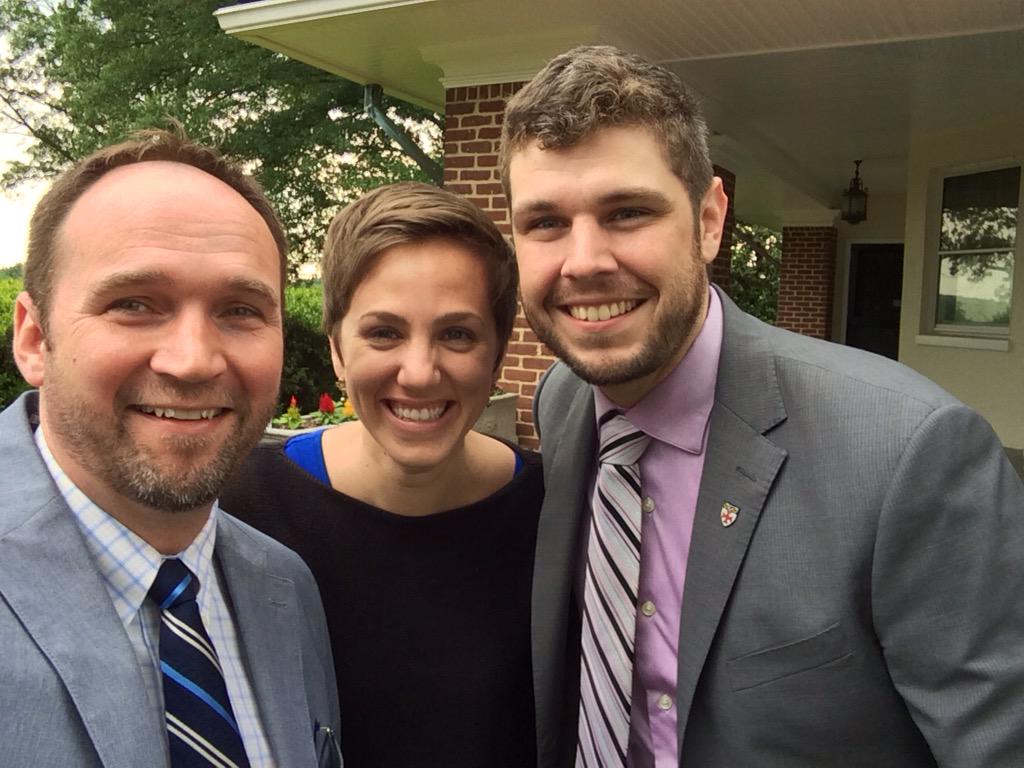
Matthew and I, along with Todd, our Dean of Theology at Huron, were honoured to be included in the Episcopal Preaching Foundation’s Preaching Excellent Program (PEP) for Seminarians. While Todd was faculty and facilitated both small group workshops and teaching, Matthew and I were grouped into different preaching groups with six or seven other Episcopal seminarians from across the United States. Within our groups we preached sermons we had previously prepared for school or church placement contexts and then workshopped them together. These sessions were interspersed with plenary sessions from the likes of renowned preacher Tom Long and smaller group sessions on practical preaching tools taught by PEP faculty.

It was an incredibly rewarding experience. Not only was the retreat centre, the Roslyn Center of the Episcopal Diocese of Virginia, a beautiful facility with heartfelt hospitality, but our fellow preachers were amazing. Huron University College is a wonderful school and I enjoy studying there, however we rarely have the opportunity to dialogue with other Anglican/Episcopal seminarians. Here, we had dozens with whom we could toss around ideas about preaching and about the future of the church, with whom we could pray and sing, and with whom we could celebrate birthdays (that’s right – I celebrated my birthday in Virginia alongside a new friend from Yale Divinity).

A great big thank you to the Episcopal Preaching Foundation for including us in PEP this year – the first of what will hopefully be many to come for Canadian seminarians!

RevGals: A Book and Belonging

I am relatively new to the RevGals community. I found them mid-way through my first year at seminary. It went something like this:

August 2013: Move 4200 km across Canada.

September 2013: Start seminary.

October 2013: Become friends with the only other female MDiv-track in my year.

November 2013: Start following every female clergy person I can find on twitter.

And then I found them: A whole community of women who are leaders in their respective churches. Women who share with each other, care for each other, pray for each other, and laugh with each other. Clergywomen who have blazed the trail for me to come behind and benefit from their wisdom and their struggles.

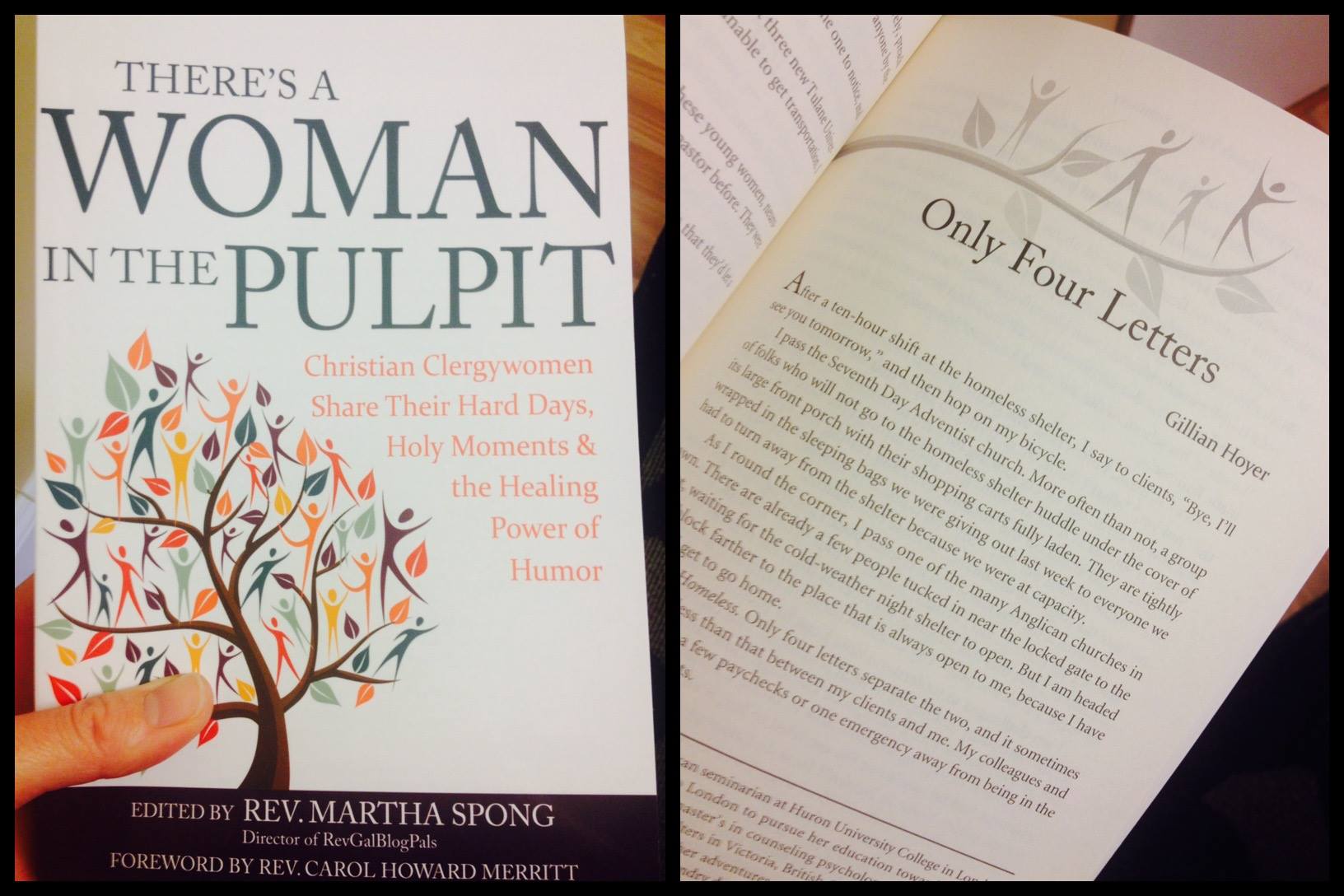
So I hung around the edges. Online as in life, I am more likely to sit and watch and read rather than jump into the fray and comment the hell out of something. But then something happened that made it impossible for me to quietly watch anymore: They made a book. Or at least they started posting about making a book and were asking for people to contribute stories to it: There’s a Woman in the Pulpit: Christian Clergywomen Share Their Hard Days, Holy Moments, and the Healing Power of Humor (published on SkyLight Paths, edited by Martha Spong).

The one thing that I love almost as much as reading books is writing (obviously term papers are long finished and my brain has deluded itself into thinking this last sentence is true. Because it sure wasn’t three weeks ago…!) and when I saw the RevGals post, I knew I had to be involved.

But… I’m not ordained [yet!?!]. What do I have to offer to a collection of stories and reflections about life as a clergywoman? Then I realized that I have been in church leadership for most of my conscious life: from the lead in the Christmas pageant to leading prayers and scripture readings weekly from the time I could reach the lectern microphone from a step stool, from choir member to music director, from serving from the time I could walk and carry a candle at the same time to preaching in pulpits across Canada, from council member to warden, from student intern to leading morning prayer when the priest is away.

Maybe I do belong.

bookAfter all, that is at the heart of most of the stories contained in this book: belonging. We belong. We belong to our families, to our churches, to our communities. We belong to the group of people who call themselves clergy. And we have found a unique, quirky, and loving group of people online – and in person – to whom we also belong. These stories are a reflection of our best days and our worst days, our touching moments and our moments of laughter and tears. They are stories of the women who have gone before me to make a place for women in church leadership and they are stories for the women and men who will come after me.

I’m biased, but it is a fantastic book. I also wrote in it, so I’m even more biased. But I think you should read it. Canadian friends, you can find it here.

Thank You

It has been a long school year and a lot has happened. I got engaged. We had some health stuff. We both had a full course load, and then some, each term. I have been working part time. And then there was the church field placement.

Twelve to fifteen hours per week. In a church. Doing stuff.

What that “stuff” was varied each week: preaching, proclaiming the word, leading parts of the liturgy, searching around for my supervisor’s reading glasses (where the heck did he leave them this week?!?), home and hospital visiting, assisting at a funeral, drinking beer at the pub while leading a bible study… the list goes on.

What did not vary each week was the love and support of that church community. St Andrew Memorial Anglican Church: Thank you.

Thank you for being a welcoming community.

Thank you for opening yourselves to me and letting me be myself amongst you.

Thank you for welcoming my partner as warmly as you welcomed me, even though he worships at another church as a part of his field placement.

Thank you for letting me learn without judgement.

Thank you for being a community where it has been okay for me to try and not be perfect.

Thank you for your encouragement, your laughter, your enthusiasm, your chocolate, and your joy.

Thank you for being a community that loves fellowship and food.

Thank you for your heart for worshipping God.

Thank you for loving me.

I have learned a lot from you, with you, and because of you. As Pastor Marty said at my last service with you, a piece of your community will come back to BC with me and will always be a part of my ministry.

The End

Second Year is finished!

The last assignments and exams have been turned in and I have concluded my time at my placement church. This is the first time I’ve turned on my computer in 4 days and it feels great.

More writing to come in the next few days and weeks, but for now, I’m enjoying some reading of fiction to give my brain a break!