Last week, I was, by all accounts, prolific on the blog.
This week, I have had the realization that the sooner I write the paper that is due next Tuesday, the sooner I start my 2 weeks of holidays. Here’s to finishing sooner rather than later! (Consequently, you won’t hear much from me until the paper is done. Unless it is going rather badly.)
Author Archives: Gillian
STOP
Stop for one whole day every week, and you will remember what it means to be created in the image of God, who rested on the seventh day not from weariness but from complete freedom. The clear promise is that those who rest like God find themselves free like God, no longer slaves to the thousand compulsions that send others rushing toward their graves.
– Barbara Brown Taylor
from her book Leaving Church
Friday Nights are Happening Nights
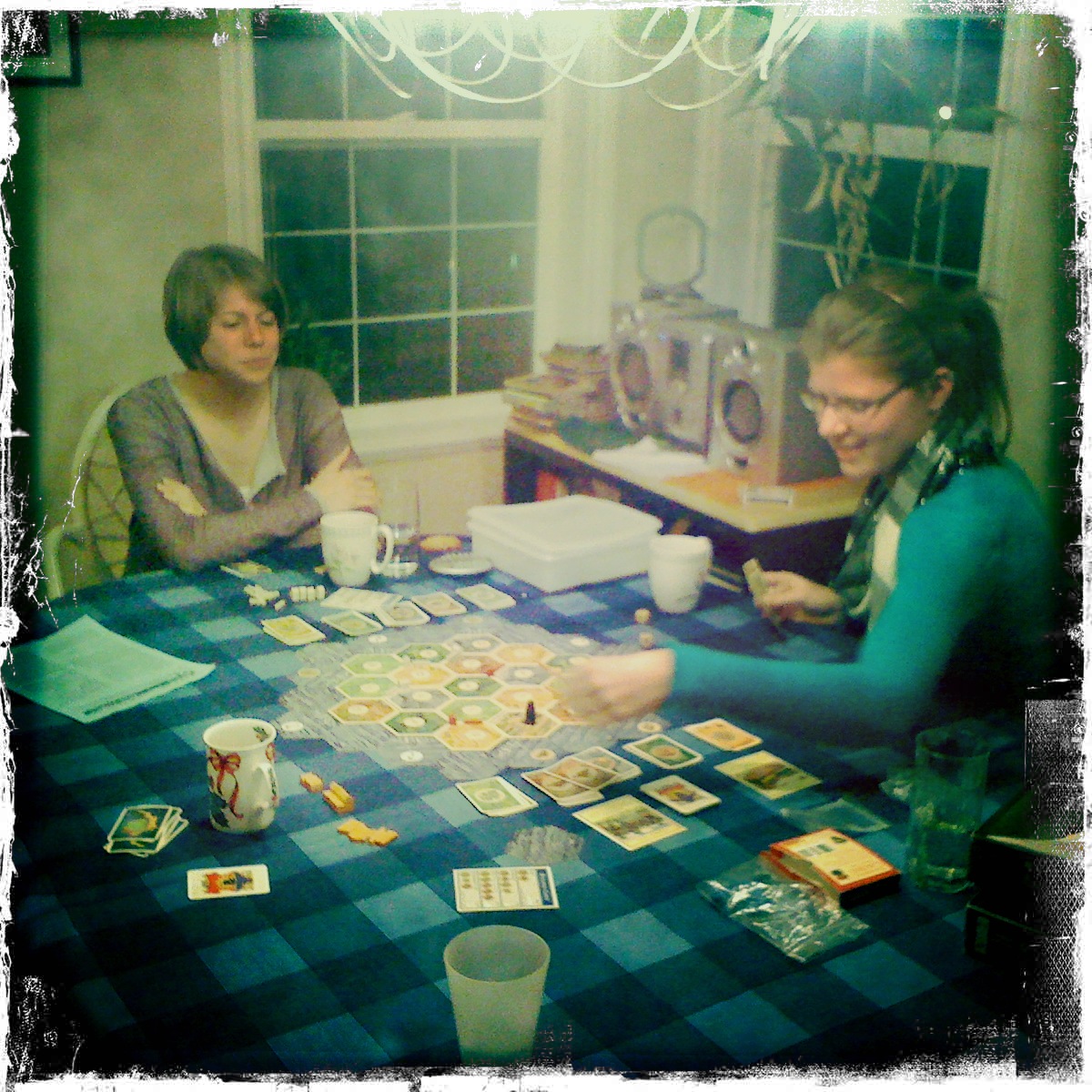
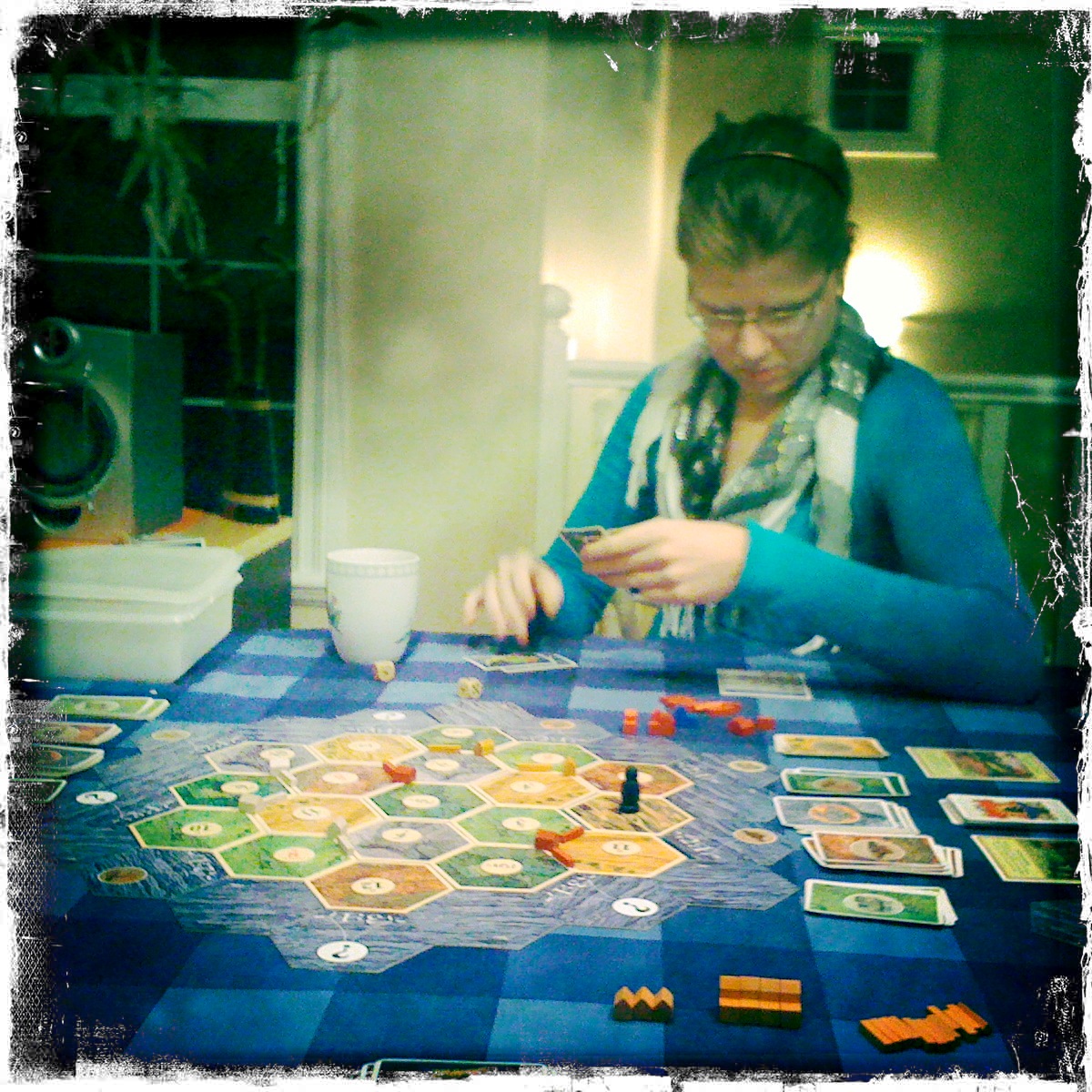


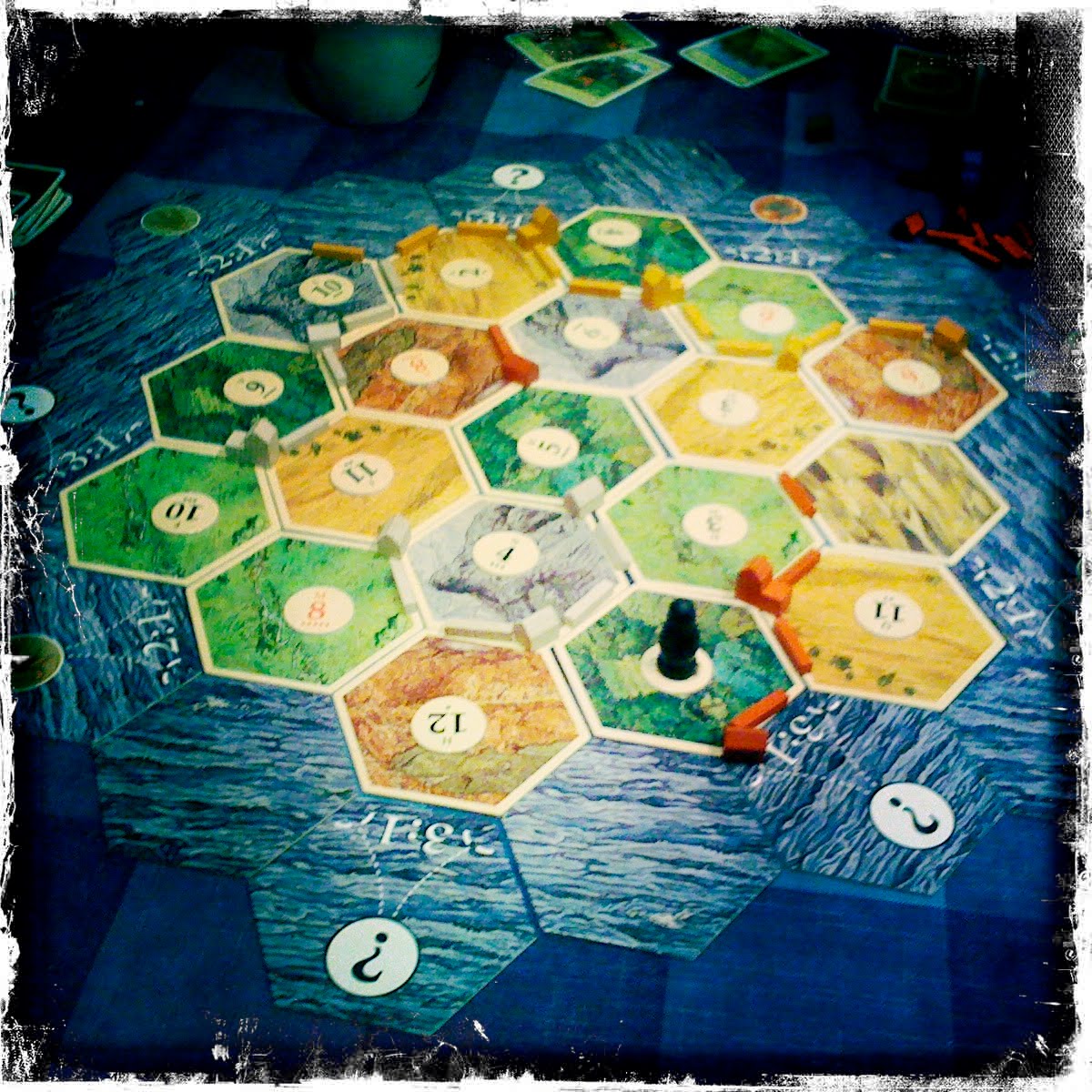
What we get up to at the KGB Residence…
(Yellow/Orange aka Caramel aka Dutch National was victorious once again.)
The Breath of Nature
I read this poem, from The Way of Chuang Tzu by Thomas Merton, last night. It is an incredibly accurate description of the weather around these parts for the last week. We’ve had some crazy wind and storms: boats beached and capsized, trees blown down, driving rain… you name it. It is both beautifully awe-inspiring and kind of freaky all at once.
The Breath of Nature
When great Nature sighs, we hear the winds
Which, noiseless in themselves,
Awaken voices from other beings,
Blowing on them.
From every opening
Loud voices sound. Have you not heard
This rush of tones?There stands the overhanging wood
On the steep mountain:
Old trees with holes and cracks
Like snouts, maws, and ears,
Like beam-sockets, like goblets,
Grooves in the wood, hollows full of water:
You hear mooing and roaring, whistling,
Shouts of command, grumblings,
Deep drones, sad flutes.
One call awakens another in dialogue.
Gentle winds sing timidly,
Strong ones blast on without restraint.
Then the wind dis down. The openings
Empty out their last sound.
Have you not observed how all then trembles and subsides?Yu replied: I understand:
The music of earth sings through a thousand holes.
The music of man is made on flutes and instruments.
What makes the music of heaven?Master Ki said:
Something is blowing on a thousand different holes.
Some power stands behind all this and makes the sounds die down.
What is this power?
Friday Photo(s)
Who ate all my jam?!?

Brittany, was it you??

(Taken with my phone)
Things that Make Me Happy
- New music from the public library
- Being able to wake up without the alarm clock
- Dinner with [new] friends
- Productive meetings for exciting things
- Taking a break and resting in God’s presence
- Quiet reflection and peaceful moments
- Wind and rain to remind me of God’s power in creation
- New toys to play with
- A clean bathroom
- Life calming down (for now)
- Finally getting permission to take 2 courses at once this summer meaning I’ll be done all my course work before I go to Myanmar in November
- A fantastic new dress
- Possible trip in June
Disillusionment
I’ve long been sceptical of the big drug corporations and their hold on our understanding of mental illnesses. While I don’t deny the usefulness of medications in treatment, I don’t think that they are necessarily the best choice or the only choice. Additionally, there is come compelling evidence that major pharmaceutical companies are going into other countries and exporting the Western/North American conception of mental illness, essentially redrawing the line between normal and abnormal in these cultures so that they can enlarge their market.
I recently heard a discussion on CBC “Q” where journalist Ethan Watters was talking about his new book, “Crazy Like Us: The Globalization of the American Psyche.” I haven’t read the book yet, though I have it on hold at the public library. From the interview, he talks about this very thing. [For the interview with Jian on Q, you can find it here (first 20 minutes of the program “Q the Podcast 2010-04-05 Regina Spektor”). For a video of an interview at Berkley, go here (the first half is interview, the second half is Q&A).]
Last month in my course, we were asked the question “Why is medication considered the mainstay in the treatment of psychotic disorders?” I had difficulty with this question, not because I have little to say on that topic (the opposite would appear to be the case) but because of the assumption it seems to make in that medications should be the mainstay treatment.
My immediate and cynical response to that question was “Because they are a relatively easy treatment that rapidly deals with psychosis and ‘fixes’ the thing that makes an individual stand out from the masses. We don’t like strangeness and difference.” Our society seems to have a preoccupation with medication and using it to control everything, including psychosis. The big pharmaceuticals are okay with that because that is how they make money. Because we are unable to cure something like schizophrenia, we concentrate on keeping it under control so that the individual can have a “normal” life. But what is a “normal” life? I’ve read some research by social psychologists working cross-culturally stating that recovery rates for schizophrenia prior to the advent of antipsychotics were closer to 60%, and that they are still around that rate in developing countries without access to antipsychotics. In North America, recovery rates for schizophrenia are basically 0%. A WHO report studying schizophrenia internationally, suggests that individuals with schizophrenia have a much better outcome in developing countries where access to antipsychotic medications are less readily available. Additionally, there is some research suggesting that medications actually do some damage to the brain, making recovery impossibly.
So after doing a lot of research, I am still wrestling with the problem of “why medication?” and how it became such a mainstay of treatment. Is it merely a money grab by the big corporations? I dunno.
After visiting a number of developing countries and spending time with regular people, I’ve seen the differences in the way people interact with each other (or don’t) and help each other. I am led to wonder, then, if medications are perhaps a “band aid” solution (because I do not deny that medications work for treating symptoms) for a deeper, societal problem.
All of this to say that I am growing disillusioned with the accepted ways of dealing with mental illness in North America and horrified that we would export our ineffective methods to other countries merely because we are the experts and we want their money. The pride and arrogance of that is astounding. My challenge now, as someone pursuing counselling and interested in cross-cultural experiences is finding a way to lose that hubris associated with my profession and approach people in a meaningful way without transferring my preconceived notions to them.
Friday Photo

God sees the little sparrow fall…
It is really windy here today. I saw a couple of birds down when I went for my walk. Even more downed branches.
On the Way to the Cross
Simon helps Jesus carry his cross (Station III)

As they led him away, they seized a man, Simon of Cyrene, who was coming from the country, ad they laid the cross on him, and made him carry it behind Jesus. Luke 23:26
Consider the things you have in life that weigh you down. Can you let go of them? Write them on a block of wood and place it into the shopping cart.
Almighty God, your Son was not too proud to accept help from a stranger when he was weakened by whipping and scourging; help me to not be too proud to accept help from others when I am weakened by disability, illness, or age; through Jesus Christ your Son our Lord. Amen.
Also remember those for whom the shopping cart is their life and the only means of storing their life.
The Last Supper
A story for Maundy Thursday.
It is evening, and you are gathered together with the other disciples in a small room for Passover. All the time you are watching Jesus, while he sits quietly in the shadows listening to the idle chatter, watching over those who sit around him, and, from time to time, telling stories about the kingdom of God.
As night descends, a meal of bread and wine is brought into the room. It is only at this moment that Jesus sits forward so that the shadows no longer cover his face. He quietly brings the conversation to an end by capturing each one with his intense gaze. Then he begins to speak:
“My friends, take this bread, for it is my very body, broken for you.”
Every eye is fixed on the bread that is laid on the table. While these words seem obscure and unintelligible, everyone picks up on their gravity.
Then Jesus carefully pours wine into the cup of each disciple until it overflows onto the table.
“Take this wine and drink it, for it is my very blood, shed for you.”
With these words an ominous shadow seems to descend upon the room — a chilling darkness that makes everyone shudder uneasily. Jesus continues:
“As you do this, remember me.”
Most of the gathered disciples begin to slowly eat the bread and drink the wine, lost in their thoughts. You, however, cannot bring yourself to lift you hand at all, for his words have cut into your soul like a knife.
Jesus does not fail to notice your hesitation and approaches, lifting up your head with his hand so that your eyes are level with his. You eyes meet for only a moment, but before you are able to turn away, you are caught up in a terrifying revelation. At that instant you experience the loneliness, the pain, and the sorrow that Jesus is carrying. You see nails being driven through skin and bone; you hear the crowds jeering and the cries of pain as iron cuts against flesh. At that moment you see the sweat that flows from Jesus like blood, and experience the suffocation, madness, and pain that will soon envelop him. More than all of this, however, you feel a trace of the separation he will soon feel in his own being.
In that little room, which occupies no significant space in the universe, you have caught a glimpse of a divine vision that should never have been disclosed. Yet it is indelibly etched into the eyes of Christ for anyone brave enough to look.
You turn to leave — to run from that place. You long for death to wrap around you. But Jesus grips you with his gaze and smiles compassionately. Then he holds you tight in his arms like no one has held you before. He understands that the weight you now carry is so great that it would have been better had you never been born. After a few moments, he releases his embrace and lifts the wine that sits before you, whispering,
“Take this wine, my dear friend, and drink it up, for it is my very blood, and it is shed for you.”
All this makes you feel painfully uncomfortable, and so you shift in your chair and fumble in your pocket, all the time distracted by the silver that weighs heavy in your pouch.
– from The Orthodox Heretic by Peter Rollins
 gillian's island