Sermon for Easter Sunday, April 5, 2015

Preached at St Andrew Memorial Church, London, Ontario.
Text: Mark 16:1-8

Well, here we are at the end.

Lent is over.

The eight short verses contained in our gospel reading this morning are, as determined by biblical scholars, the final original verses of the gospel of Mark: The gospel of Mark is over. We have reached the end of this too.

The end of the gospel of Mark begins with the equivalent of a Biblical all-nighter: The Sabbath has ended with the going-down of the sun on Saturday, but it is too late to do anything about Jesus’ body tonight. So, the women conclude, we may as well just try and sleep a little.

It has been an emotional and heavy week – Jesus: friend, leader, and hope, has been killed.

The women – Mary, Mary, and Salome – these faithful women who have followed Jesus from a distance all through his ministry and then, even when none of the other disciples remained, followed him right up until his death.

They watched while their friend Joseph from Arimathea collected Jesus’ body from the cross, wrapped it in linen cloths, and then laid it in a stone cold tomb. The stone door was rolled in front and that was the end.

The Sabbath began and everyone rested. Though I imagine it was more restless than it was rest: All of Jesus’ ministry has been building, working towards this point, culminating in Jerusalem where it would be launched and recognized by everyone around them, the oppressive government would be overthrown, social injustices would be righted and our nation would finally be restored to God’s favour.

And then it failed. Jesus is killed so dishonourably that nearly everyone fled and went into hiding, and those who did stick around, like the women, did so from a distance.

I can imagine the women deciding that though Jesus did not fulfil their hopes for their nation, they still loved him and he was their friend and leader and they aren’t about to leave him, even in death.

So they wait until the sun goes down and the day of restless rest ends. Then, they head out to the market to find spices. They’re not prepared with all of the ointments and spices that you would anoint a body with at death: In their mind, Jesus wasn’t supposed to die so why would they have them on hand?

Since this rest is so restless, they probably don’t sleep much that night. Up all night pacing, waiting to finish their duty to their friend and then fade back into obscurity when they return to “normal” life. Then tossing in their beds, watching time tick by:

3:48 am: I should really get some sleep

3:49 am: I can’t believe Jesus is dead!

3:50 am: It must be time for the sun to rise soon; I want to get this done with.

How much, in a time before battery operated flashlights or iphone flashes, we depended on the sunlight of day to get us through.

5:10 am: Never mind sleep. I’ll just get up. The sun will be rising soon anyway.

5:11 am: Oh no! I forgot about the stone door. Who will roll away the stone for us?

For some reason, the women set off anyway, without any plan about how to actually get to Jesus’ body in the rock tomb on the other side of the stone door.

Perhaps it is some unconscious remembrance of Jesus speaking to the disciples while he was alive: three times the gospel of Mark has Jesus tell his disciples that he will go to Jerusalem, be condemned to death, be mocked and beaten, be killed, and then that he would rise again in three days. But I don’t know if the women actually heard, understood, or remembered this, after all, in the gospel of Mark everyone who knows Jesus and should know what is going on, don’t get it. Jesus keeps telling them and they keep not understanding, so it isn’t too surprising that the women would be debating about how they would roll the stone away from the door of the tomb to get to a body.

And so the women arrive at the tomb, expecting to find death, even though they have been promised life, in order that they might anoint Jesus’ body.

However when you are looking to find death and you find life instead, amazement and surprise are pretty natural responses.

Not only is the stone door moved and no longer covering up the opening to the rock tomb, but there is, what is described as a young man dressed in a white robe, just sitting to the right of the opening.

Sounding a little bit like the office administrator for a busy CEO, he says: “Oh, you’re looking for Jesus? Sorry, you just missed him.”

Perhaps realizing that the women are, understandably, a little freaked out, the young man, who scholars think is an angel, says what all angels tend to say when they encounter a human: Do not be alarmed.

Then: He has been raised; he is not here.

These two phrases pack some pretty major punches:

First the angel says, He has been raised, like this is the obvious one that the women should know and understand.

He has been raised.

I am told that it was normal for people from that time period to speak of resurrection like it was a more common event. The Caesars were, in popular lore, apparently resurrected to be gods when they died.

The women lived during this time, they heard Jesus speak about being raised after three days, and they’re still surprised. But then again, this isn’t popular folklore that we’re talking about.

Either way, when you’re expecting death and you find life, amazement is a pretty natural response.

I mean, if any of us were to go to the cemetery and find graves open and bodies gone, we’d be, at the very least, surprised.

He has been raised: We can say with the apostle Paul, Death has been swallowed up in victory!

Death has been swallowed up in victory. Jesus is alive and with that resurrection he has broken any of the power that death might have held on us. Death is not the final answer. In the ultimate inversion, the final answer is not death, but life.

The women went to the tomb expecting to find death when they had been promised life. How often do we go through life expecting to find death when we, too, have been promised life? In the liturgy of baptism, [which we will all participate in this morning with Kathy as she is baptised,] we thank God for the water of baptism, because through baptism we are buried with Christ in his death and then also share in his resurrection, being reborn by the Holy Spirit.

Do not be alarmed, you are looking for Jesus of Nazareth who was crucified, the angel tells the women, He has been raised: he is not here.

He is not here.

This second phrase is just as terrifying as the first. At least with He has been raised we can talk about resurrection.

But He is not here? If Jesus is not in the cold, dark box where we left him, where is he?

It might have been simpler to have a safe, contained, and predicable God who stays put, right where we left him.

If we have learned anything these last weeks of Lent, it is that Jesus does not stay put. That following God is not simple or safe – and certainly not predictable.

After all, we are talking about the one who whipped corrupt moneychangers out of the temple, who spoke back to unclean spirits before casting them out, who healed a disciple’s mother-in-law, and who challenged us to take up our crosses and follow him.

Take up our cross and follow him. That is so much more poignant this side of Good Friday. Suffering, death, resurrection, life.

Follow him to life.

So when the angel says He is not here do we stop and peer into the empty tomb and wonder where God is?

It is certainly understandable that we might do that, with violence in Kenyan universities, discriminatory legislation being passed in the United States, and financial injustice and extreme economic disparity on display in our own city.

But then we might remember what else the angel said to the women: He is going ahead of you to Galilee there you will see him, just as he told you.

And if we decided to go back to Galilee, we might leave the end of the gospel of Mark and turn back to the beginning. Going full circle to read, The beginning of the good news of Jesus Christ, the Son of God … In those days, Jesus came from Nazareth in Galilee …

So it isn’t the end: this story is not over.

It is only the beginning and we have a part to play.

It is only the beginning and, if you wonder why there is still so much pain and distress in the world, it is because God isn’t finished with it yet.

It is only the beginning. Mark is inviting us to get off the bench and get into the game, sharing, with everyone we meet, the good news of Jesus’ complete identification with those who are suffering and his triumph over injustice and death.

It is only the beginning and we are empowered and equipped to work for good in all situations because we can trust God’s promises that all will, in time, come to a good end, even when the only evidence of that we can see in the moment is a cold, dark tomb.

Death has been swallowed up in victory! Where, O death, is your sting? Where, O death, is your victory?

Well, here we are at the beginning…

Amen.

Sermon for March 22, 2015 (Lent 5)

The fifth Sunday of Lent, Preached at St. Andrew Memorial Anglican, London, Ontario.

Text: John 12:20-36

I have never been much of a gardener. I have joked that the only plants I ever want are succulents – cacti and the like – because they seem to be the only thing that can take the neglect I would put them through. I have certainly never lived on a farm. I have always been a city kid – a city kid who loves the outdoors, but at home in the big city none the less.

My grandparent’s retirement project was a farm in the county. To seven-year-old eyes, it seemed like a big farm, but was really not more than an acreage with a turn-of-the-century limestone farmhouse, wooden board barn, and an apple orchard.

But it was the farm fields back behind their property – fields that stretched way back to the tree line, which is a long way when you’re a kid – that captivated us as grandkids. Many summer afternoons were spent hiding in the fields, creating forts, and hoping that the tall grasses and grains would hide us from the watchful eyes of parents and grandparents – wandering as far away down the back field as we dared.

As we plucked the grain from the stalks, I never, in any of those long summer days, stopped to think about what happened to the grain when we were done playing.

Unless a grain of wheat falls to the ground and dies, Jesus says in today’s gospel reading, it remains just a single grain; but if it dies, it bears much fruit.

Until the seed becomes buried in the ground, it has no hope of bringing forth new life.

We have spent these last weeks of Lent participating in just that: contemplating the wheat that falls to the ground and dies and then is buried in the tomb.

It seems like just yesterday that we had ashes placed on our foreheads in the shape of a cross: “remember you are dust, and to dust you will return.”

Death. It has been ever present with us this Lent, in more ways than one.

And while it is difficult to imagine getting closer to the cross than the intimate placement of it on our foreheads, our readings, our meditations, and our worship together over these last weeks have been doing just that. They have been gradually bringing us closer and closer to that cross. Closer to the reality of death: Jesus keeps predicting his own death and now, in today’s reading, he is meditating on it with his disciples:

Unless a grain of wheat falls to the earth and dies, it remains just a single grain; but if it dies, it bears much fruit.

Those who love their life lose it, and those who hate their life in this world will keep it for eternal life.

Strong words: Those who hate their life in this world will keep it for eternal life.

I don’t know about you, but I was always taught that hate is a stronger word than I should ever use.

And the words “hate their life”?

As a society we spent so much time and money on bettering ourselves, on loving ourselves, on teaching our children to have positive self-esteem and to love themselves too. That clearly jars with what Jesus is saying here. Or does it?

We heard Pastor Marty preach on Mark’s version of those words a few weeks ago when they came up in our Sunday readings: For those who want to save their life will lose it, and those who lose their life for my sake, and for the sake of the gospel, will save it. And he challenged us to take up our cross with us every day.

I like Luke’s version of the same phrase: Those who try to make their life secure will lose it, but those who lose their life will keep it.

Trying to make their life secure. That sounds a lot like playing it safe, being fearful of sticking our necks out, excessive caution, a reluctance to identify with Jesus and the way of the cross.

Today we are also commemorating the life of a martyr:

Oscar Romero, the Catholic Archbishop of El Salvador who was assassinated, while celebrating the Eucharist, 35 years ago this Tuesday.

He dared to speak up against injustice. He dared to speak up when people were being mistreated. He dared to speak up and ask for basic human rights for his people.

He challenged people to feed the poor, to give drink to the thirsty, to clothe the naked, to love their enemies and seek to make them enemies no longer.

He dared to live the gospel – and lost his life.

Today we also commission a new leader to a new ministry and position of leadership in the church – in this Church of St Andrew Memorial and in the whole church. Leadership in a ministry that we – all of us here at St Andrew, whether we have fancy robes and special chairs or not – share together as a family.

And as we continue this path towards the cross together, we will come to Mandy Thursday where, following in the footsteps of Jesus when he wrapped a towel around his waist and knelt in front of his disciples to lead by serving, we wash each other’s feet in loving service…

From today’s gospel: Whoever serves me must follow me … Whoever serves me, the Father will honour.

Maybe that is what Jesus is asking. It isn’t an ask for us hate who we are in order to gain eternal life in heaven. It is about now, because daily decisions that we make about following Jesus in the way of the cross are simple and are before us every day.

It is the questions of:

Can you keep loving me and serving me, even in the midst of the pain of the valley of the shadow of death?

Even on the day when the gloom clouds will not clear?

Even when your co-workers are talking about you behind your back?

Even when nothing is going right and everything is getting up in your face and discouraging you?

What about when things are going so well that the temptation is to think that you don’t need Jesus? Can you keep loving and serving me then, says Jesus?

And, Jesus adds, God honours and glorifies those who follow.

            Not those who are successful followers.

            Not those who always make the right decisions.

            Not those who never have anything go wrong or never been discouraged.

But those who follow.

Luckily for me and my brown thumbs, I don’t actually have to do the work of making the seed bring forth new life. The seed already has that new life inside of it – I just have to make sure it gets into the ground and water it now and then, when I can.

We are the Church that is the wheat which bears its fruit in dying.

And so, we now prepare to go to the table, where we recognize that because we have died with Christ, we live with him, and, as we holding firm and following him, we shall reign with him.

Amen.

Multitude

I was honoured to be invited to contribute to a Lenten reflection booklet curated by a friend and fellow postulant in the Diocese of British Columbia. My reflection was for today and is based on the Hebrew Bible lectionary reading for the day, Genesis 17:3-9.


Your name shall be Abraham for I have made you the ancestor of a multitude of nations. 

Suddenly there was with the angel a multitude of the heavenly host, praising God.

I looked, and there was a great multitude that no one could count, from every nation, from all the tribes and peoples and languages, standing before the throne and before the Lamb, robed in white, with palm branches in their hands.

Jesus said to them, “Very truly, I tell you, before Abraham was, I am.”

Before he even reproduced, God had made Abraham the father of a multitude of nations. It still seemed impossible – there was not even one child, let alone a multitude of nations.

And before Abraham was even conceived of, Jesus is.

In the beginning was the Word…

Time and space. What is time to God? A thousand years is like a day to God, we are told. Yesterday is last year, tomorrow is 2019. Or 2130. Or 1875.

God was, God is, God will be.

That multitude of nations? God knew them then. God knows them now. God sees and knows those that will be. Each and every one.

Christ has died, Christ is risen, Christ will come again:

And yesterday, today, and tomorrow we all join together; with Abraham, with the angels who heralded Christ’s birth, and with the multitude from every nation envisioned by John, praising God.

Spring (?!)

1982333_10153966181325311_1595311846_nSigns of spring are all around.

New life emerges as snow slowly melts and creates puddles of dirty slush on roads and sidewalks. But birds are singing, warmth is seeping into the world.

I have traded my warmest jacket and boots for lighter ones and colourful ones. Because these are the days when colour is also coming back into the world.

New things are afoot. I have been working with our theological students council to make things new and try new ways of working together that will, hopefully, make us more effective as a council. I have a new job – a short, part-time contract with the mental health organization I’ve been working with for a couple of years on a relief basis.

And so, in this changing and warming environment, we continue the lenten journey towards Easter when, once again, we celebrate life made new.

Snow Squalls

Processed with VSCOcam with a6 preset Processed with VSCOcam with a6 preset

This is why living in southwestern Ontario is a little bit crazy in the winter.

The snow was blowing wildly across the road, creating drifts well into the roadside lane and blinding us from time to time. Probably not the best day to be on the road, but great for taking pictures. (We made it to our destination safely!)

This was February. Here is to hoping that March will be a little nicer to me than February was on the cold and snow department!

Publication!

I did some writing last summer, though not for school.

One piece that I wrote over the summer is getting published in a book this spring! Its a short essay I wrote that is, essentially, a theological reflection on the work I used to do in emergency shelters in BC. It will be published in the book There’s a Woman in the Pulpit: Christian Clergywomen Share Their Hard Days, Holy Moments, and the Healing Power of Humor which is set to come out mid April (though the amazon page says mid-May).

The book has come out of a community of women who’s wisdom I have appreciated, the Rev Gal Blog Pals. I’m looking forward to hopefully meeting some of them as we get closer to publication. I’m also really looking forward to reading everyone’s essays in the book!

You can see more about it on the Publisher’s page (Skylight Paths Publishing), or on Amazon.

I’ll keep you posted as more information becomes available about its publication date and so on.

Sermon for February 8, 2015

Text: Mark 1:29-39, preached at St Andrew Memorial Anglican Church, London Ontario.

I’ve been hemming and hawing about whether or not to post this one. It is a little bit more personal than usual, but it was a story that wanted to be told in light the readings of the day and in light of life in my placement parish. In addition, people have asked to read it and, ultimately it has already been offered to a community and this is another, albeit more public, community of mine. The story wanting to be told came out of a conversation with my Homiletics professor about how challenging the idea of healing is for so many people, especially those of us who have grown up with the stories of Jesus healing people throughout the gospels. What does that even look like? So, with some help that is noted at the bottom, I wrote a sermon.

Perched on the edge of the Sea of Galilee, the town of Capernaum is today in ruins. Visitors can wind between the ancient stone walls and palm trees while enjoying the sunshine as they stroll out the walkway over the Sea. For the Romans, Capernaum was the town that supplied their fish: upwards of 200 boats set out from here daily to ply the waters of the largest freshwater lake in Israel, catching boatloads of fish and making their living. Capernaum, in the region of Galilee, is just down the road from Nazareth, where Jesus grew up. It is likely that Jesus visited here with his father, Joseph, to ply their trade as carpenters. And it is in this region, in this town, that Jesus begins his ministry. He launches it from the synagogue, the town centre of worship, justice, and community life.

Jesus has come to the synagogue to teach. And teach he does. We heard in last week’s readings how he taught with authority, even more authority than the local teachers. Then he amazed everyone present by casting an unclean spirit out of a man.

Perhaps it was this event, the healing of a man with an unclean spirit, that prompted Simon to look over and catch the eye of his brother, Andrew. The nod in return settled it. And there we pick up the story this morning.

There is an urgency where this morning’s reading from Mark begins: “As soon as they left the synagogue they went to the house of Simon and Andrew…”

Simon must have been tripping over himself to catch Jesus on the way out of the door: Teacher you have to come with me, come back to my house – right now!

And, immediately, back to Simon and Andrew’s house they go.

Simon: the impetuous first-called disciple of Jesus. The fisherman who Jesus called to fish for people instead.

We don’t know what his wife’s name was. We probably wouldn’t have even known he was married if it wasn’t for this story. But he must have been married, because now we are face to face with his mother-in-law.

I imagine her a strong woman, a capable woman who manages the household well. Goodness knows, with Simon, the rash decision-maker, and his brother Andrew in the house, she must have a strong personality in order to compete with theirs. I’m guessing that she has a strong handle on the dealings of the place, probably does a lot of the work of making the food that they eat and caring for the affairs of the house.

But she is sick. Not just any kind of sick – she has a fever. If they’ve had good times with the fishing, they’ve had the money to bring in a doctor to look at her. But whether the doctor has been or not, it is clear: there is not much they can do. A fever is pretty dangerous – there is not much that anyone can do to lessen its hold.

So Simon and Andrew drag Jesus home from the synagogue. After all, he has just demonstrated his authority to teach and cast out unclean spirits with a word. Maybe he will speak a word for Simon’s mother-in-law.

But Jesus does more than that. He walks over to her bedside, looks at her flushed and sweating face, stares into her feverish eyes, takes her by the hand and lifts her up.

And here is where I get stuck in today’s reading: She is healed.

The fever is gone and Simon’s Mother-in-Law is healed.

So what does Simon’s mother-in-law do? She goes back to life-as-normal. She gets up and begins to serve Jesus, Simon, Andrew, and the whole crew.

That’s normal, right?

Except it isn’t.

Healing hardly ever comes like that, at least not in my experience. You’re not sick and dying one day and carrying on as if it never happened the next. Even a minor cough or cold can put you out of commission for weeks. And for those who have been laid low by serious illness or a traumatic injury, it is hard to say if the healing will ever be complete. Indeed, all of those of us who have broken bones in the last year can attest to that: we are still doing the therapy needed to regain full use of our broken fingers, wrists, and arms. It is unheard of that someone as ill as Simon’s mother-in-law could get up and go about the task of feeding a full house so soon after her fever left her. In this world, in this life, it just doesn’t work like that.

Which is probably the point.

It is no wonder that the news of Simon’s mother-in-law’s healing spread so quickly – seeping out of the house and down alleyways, drawing everyone in the city to gather around their front door, bringing with them all of their sicknesses and troubles.

It is no wonder, really. Because who doesn’t yearn for that time before: Before I fell. Before the terrible car accident. Before the diagnosis was given. Before my relationship fell apart. Before my loved one died.

Before.   Before.    Before.

Before and as full of the old life as Simon’s mother-in-law now appears to be.

But could she really have returned to “before” – been fully returned to how she was before she was sick?

She has experienced something that, though it didn’t take her life, has still taken something out of her and replaced it with something entirely new, something different. If nothing more, she has an awareness that she did not possess before.

For her, and for all of those crowded outside of Simon and Andrew’s front door seeking healing, life will never be the same as it was before: they have experienced the depths of despair, the heights of hope, and the wonder of life renewed in a way they likely haven’t felt before.

At least that is how it was for me.

I have to go back many many years now to get to that place, to the autumn when my mum died. To those long weeks, months, and years while we watched her health decline, watched her get weaker and weaker, and then struggle just to breathe – all of the while yearning and praying – to go back to before. Back to a time when she was healthy and we could just be a normal family. And while our prayers for her to be restored to health increased in frequency, our awareness that this was not likely to be also increased. At least it would not a return to health in this life.

Of course, this is not a perfect example, because we did not get that miraculous healing – at least not in the conventional sense.

But I will not forget the awareness that came to me one night as I was sitting in my friend’s van, while we talked and cried together. I realized that while I would do anything to have her back, for things to go back to how they had been before, I would be hard-pressed to give up anything I now knew:

About the preciousness of human life and the gifts of the laughter and music as friends gathered around mum’s bed to talk and sing songs.

About the wonder of community who showed up in a thousand and one ways to love us and care for us.

About the bond of family and friends who will drop everything just to come and be present.

About my own resilience and the profound, inexplicable, but so very real presence of God.

And about how faith did not die when it came up against some of the worst of what life can deal, but was mysteriously strengthened.

I wonder if Simon’s Mother-in-Law and all those gathered around their door, those who encountered the healing touch of Jesus experienced something of that as well in the aftermath of their respective miracles and their return to their ‘old lives.’

Of course, even the stories of healing we hear now are just a glimpse of what will be one day. Jesus knows this, which is probably why he didn’t stay in Capernaum in the house of Simon, of Andrew, and of Simon’s mother-in-law.

Before today’s reading is done, we’ve followed him, in the wee early hours of the morning, to a deserted place where he rests while he prays.

Perhaps he, too, is trying to make sense of everything that he has seen, heard, and experienced. Maybe Jesus is trying to put things into perspective as well, and the only way he knows how to is in the presence of God.

And then his disciples track him down – everyone is searching for you, Lord. And so are we… and Jesus recognizes that there is more to be done, because the work of God is so much broader, wider, and deeper than any of us can ask or imagine. His preaching, and his healing, throughout the region of Galilee is a taste of everything that God will one day do.

It could not be contained by the four walls of one family home. It could not be contained by one small fishing town. It couldn’t even be contained by the whole region of Galilee.

It is meant for all of the world.

Amen.

While this story is completely mine, the inspiration for the second half of the sermon came from Rev Dr Janet Hunt, whose words and story so clearly articulated what I was trying to say that I borrowed many of her ideas and some of her words and phrases. She has graciously posted on her website that those of us who preach may use her posts in whatever ways we feel called in our sermons. I am so grateful for them because they gave voice to what I was trying to say. Thank you for those words and allowing them to be shared even further. She posts weekly, generally on the lectionary, and I always find inspiration in what she writes, even if I am not preaching.

That Finger

IMG_0503 IMG_0504  IMG_0518

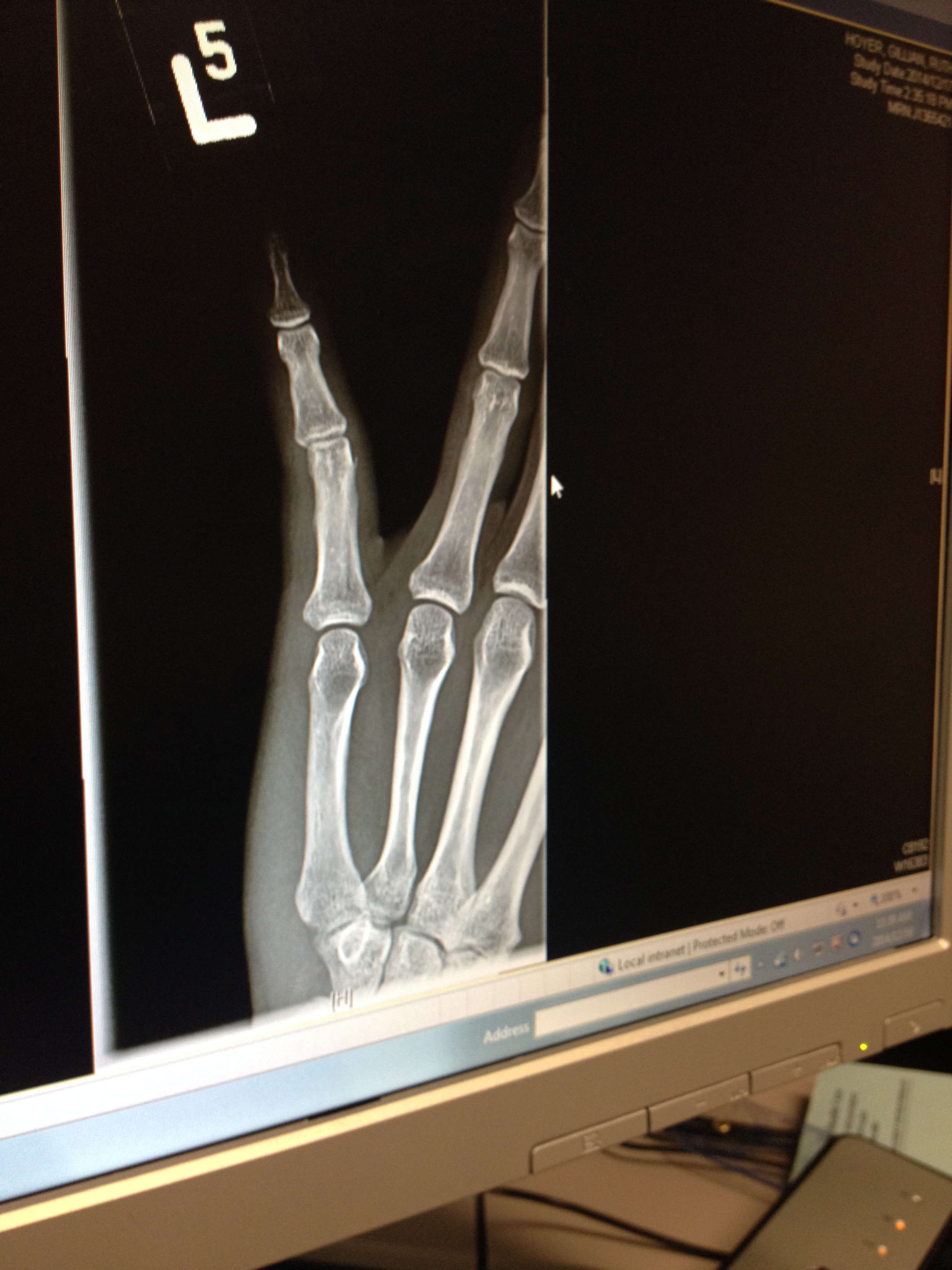
So I broke my broke my finger just before Christmas.

Despite its beautiful colouring, I really didn’t think that it was broken for a week. However when it only got worse, not better, I decided to go and get it checked out. Lo and behold, it was broken.

*Sigh*

It spent two weeks in a giant fibreglass cast over Christmas (good thing it was mild this year – the cast wouldn’t fit into the sleeve of any of my warm jackets!) before migrating to a removable splint (hello full showers – so much nicer!).

Going through my photos I found these three lovely views of the finger. Take note, some of the crook in the finger was already there from an injury in elementary school.

Lovely, eh?

The finger is pretty much all better now. I had a few visits with the therapists in the Hand Clinic here in London and range of motion is back. I can type with both hands again (yay!) and do all of the other things that two handed people do quite comfortably. Its amazing how much one uses the pinky for!

Sermon for January 18, 2015 (Epiphany 2)

Text: Psalm 139 and John 1:43-51, preached at St Andrew Memorial, London Ontario.


I want to start by telling you a story.

It may be a familiar story, it may be not.

It is a story that I grew up with – my Sunday School had it on flannel graph.

It wasn’t directly in our readings this morning, but it was there, hovering in the background.

It’s a story that all of the individuals in today’s gospel would have been very aware of. Jesus would have known it, educated as he was in the stories of the history of his people. Philip and Nathaniel surely would have known it. It is likely one they grew up with on cold evenings around the fire before bed.

It is a story everyone in Israel would have known because, even though it had taken place centuries earlier, it was a significant story of the founding and establishing of their nation, of their people.

The setting of this story is centuries earlier than where we are with Jesus, Philip, and Nathaniel. To get to its location, we must go a little ways south of where the gospel is set in Bethsaida, south past Samaria and towards Jerusalem, but not quite that far.

It is mountainous country here, rocky and cold; the kind of barren land that makes it an unlikely place to stop and spend the night. But when you are fleeing for your life, anywhere that seems safe will do.

Fleeing for your life.

Jacob, the younger twin son of Isaac and Rebekah, is fleeing from his brother Esau. Esau the hunter, whose hunger for lentil stew was more important than his birthright. Jacob the deceiver, who tricked Father Isaac into giving him the blessing of the firstborn, and thus earning the hatred of his elder brother. To escape being killed by Esau, Jacob runs.

The Psalmist (139) says, “Surely the darkness shall cover me, and the light around me become night.”

Jacob runs until he can run no more, until he is covered by the night – both a night of darkness and a night of despair. At night it is cold – as cold as the angry brother left behind – and having nothing soft to lie on, Jacob takes a stone and makes it his pillow.

But, again, as the Psalmist says, “You search out my path and my lying down, and are acquainted with all my ways … You hem me in, behind and before, and lay your hand upon me … Where can I go from your spirit? Or where can I flee from your presence? If I ascend to heaven, you are there; if I make my bed in the depths, you are there. If I take the wings of the morning and settle at the farthest limits of the sea, even there your hand shall lead me, and your right hand shall hold me fast … For even the darkness is not dark to you; the night is as bright as the day, for darkness is as light to you.”

Jacob may be able to flee from his angry brother, but he cannot flee from God.

So Jacob sleeps using a stone for a pillow. With an uneasy resting place like that, it is no wonder that Jacob has a vivid dream:

He dreams of a ladder set up on the earth. It must have been a ladder without end for its bottom rested on earth and its top rungs reached all the way to heaven. If that were not enough to make it an unusual ladder, the angels of God were ascending and descending on the ladder: crossing between heaven and earth. Heaven’s gate, where the earth becomes heaven’s door.

God has found Jacob – he cannot flee from God – and now God is standing right beside Jacob:

He speaks: You may be called the deceiver, Jacob, but I am the God of your father and your grandfather, and I know you. I know you and now I want you to know that I bless you. I promised to Abraham, I promised to Isaac, and now I promise to you: I am with you always. I am with you and your descendents – even when it seems all hope is lost and I’m not there, I am. And from your descendents will come the one who will end all of our exile…

Jacob awakens and takes the stone that was his pillow and makes it into a pillar and calls the place Beth-El – the house of the Lord. And it is at this place, Beth-El, that God changes Jacob’s name from Jacob – deceiver – to Isra-El – God is triumphant.

Centuries later, where we began with our gospel, this is the vision that Jesus presents to Nathaniel:

“Here is an Israelite in whom there is no deceit.”

You are no Jacob, the deceiver; you are Israel – you speak your mind and you speak the truth.

“Where did you get to know me, Jesus?”

“I formed your inward parts and knit you together in your mother’s womb. You are fearfully and wonderfully made – your frame was not hidden from me when you were being made in secret, intricately woven in the depths of the earth.” (Ps. 139)

“I saw you under the fig tree,” says Jesus. I saw you… sitting, enjoying figs, philosophizing with the best of them … I saw you scoff in disbelief when Philip told you that they’d found me in Nazareth; that they’d found the one about whom Moses and all of the prophets spoke – the Messiah, the Anointed.

And as Nathaniel glances around, trying to remember if he’d seen someone hiding, eavesdropping, in the fig tree while he and Philip had been speaking, he has an epiphany – his sudden and striking realization:

“Teacher, you are the Son of God! You are the King of Israel!” It is YOU!

Jesus, in turn, offers him a further vision: “you will see heaven opened and the angels of God ascending and descending upon the Son of Man.”

Remember the dream of your ancestor, centuries ago? I am the ladder, says Jesus. Come and see, heaven is open. The kingdom of heaven is upon us.

Come and see.

And that is how we got here, in Bethsaida, with Jesus and Philip and Nathaniel:

Philip sought Nathaniel and told him they’d found Jesus.

Nathaniel scoffed.

Philip’s only reply:

“Come and see.”

Come and see

That is all that is asked of us, and it is especially relevant that we get reminded of that in the gospel this morning, during the season of Epiphany.

Nathaniel came and saw and found Jesus and, in finding Jesus, found himself as a disciple.

The shepherds came and saw and found a baby, lying in cloths in a manger and, in finding Jesus, found themselves his messengers proclaiming what they had seen.

The magi came and saw and found an infant king and, in finding Jesus, found themselves the bearers of extraordinary gifts for a king.

God sees us – where we are, who we are, what we are.

God knows us – every single intricate part and all of the thoughts we daren’t even voice aloud.

God calls us – calls us by name. Our deepest names. Because of, and in spite of, knowing us, God calls each one of us.

All we need to do is come.

Because it is in answering the “come and see” that we have our own epiphany – our sudden realization: we find Jesus and Jesus finds us. In that finding, we realize who we are – who we are as Jesus’s followers and we learn what it means to believe.

Come all you who are faithful, and all who would like to be faithful.

Come all you who walk in darkness and hunger for the light.

Come –

Have faith enough, hope enough, despair enough, disbelief enough to draw near and see for yourself.

Come.

Come and see.

Come and be found.

Month in Review

I’m still here!

It has been a slow start to writing in 2015, mostly because I broke my hand just before Christmas and am only a few days back into having two hands available for typing. It is a wonderful feeling to have all ten fingers working[mostly] properly again! It was a freak finger jam of the finger I dislocated as a kid and I spent the second half of December in a bright blue cast from finger-tip nearly to elbow, then the last two and a half weeks in a removable splint. Thursday I was set free to “take it easy” which, obviously, I have been doing…

The last month in review:

IMG_1827We had a lovely Christmas week at Matthew’s family’s home outside of Ottawa, then down to Montreal for a few days with some of both sides of my family before heading to Sarnia for New Year’s Eve with that fantastic gang.

School has begun again, rather uneventfully. Some good courses this term, with a nice balance of practical and academic. I remain in placement at St Andrew Memorial Church and have been refining learning goals for a new term of new learning.

Matthew and I continue to plan our wedding – we’ve met with one caterer and will meet another next week. The date (October), venue, and priest to do the ceremony have all been settled. Fitting for two priests-to-be, the things we have been deliberating on most have included liturgy and who will read what for the service!