Off and Away

I’m off on another adventure!

Today I leave, with a group of others from London-area, to spend the next nine days in El Salvador. We will be UN observers at the upcoming presidential election in El Salvador and then will have the opportunity to visit PWRDF partners there: the Cristosal Foundation and CoCoSi. I’m looking forward to learning more about the work that these two partners do.

I may have been quiet on here as of late, but I have been writing! Stay tuned to justgeneration.ca (or like it on Facebook!) to see updates from me as I am able to send them back from El Salvador. I do not expect to have regular and amazing access to the Internet there, so sending blogs and photos back to justgeneration.ca will be a priority over putting them up on this blog. A large story will come when I return, however!

In the meantime, I am anticipating warmth for the first time since…. August?! In a temperature change felt only when I moved to Australia (or on extreme chinook days in Southern Alberta!) I’ll be going from a balmy -19C (-30 with the windchill, I’m told) here in London to a gorgeous high of +32C in San Salvador today. Bring it on!

A Sermon for November 17, 2013

I was invited to speak about the work of PWRDF at two churches this morning, in Woodstock and in Huntingford, Ontario. As last week was the launch of our new “Fred Says” food security campaign, I focused on food with the stories that I told.

This is, more or less, the text of what I said. Typos are likely and I know I ad-libbed as I went – for one thing they used the old lectionary (and only read 2 of 29 verses of the OT reading) so I had to quickly make up a connection between what I’d prepared (Isaiah) and what they read (Micah) and the gospel. And, as I was told they wanted to have pictures, I had to write it out to give to the person controlling the powerpoint slides so that they would know when to switch from one picture to the next. Most of the pictures I used were my own, from trips to Kenya and South Africa, though I took some from the PWRDF Flickr account (licensed under Creative Commons).

We seem to be at that time of year when we our readings get “all end-timesy”. (That is the technical term I learnt in seminary.)

I hear the gospel this morning and it is a little disheartening: wars and insurrections, earthquakes, plagues, and, if I can add one, typhoons… There is enough devastation in the world, we don’t need any more.

And then I went back to the Isaiah reading and was a little encouraged: That is going to end. In the words of a social media campaign, “It gets better”.

But what about the here and the now. I’m not one to sit and wait for that switch because I believe that God has called us to be involved in our world NOW.

Reflecting on that change between the destruction in the gospel and the hope in Isaiah, I was reminded of a technique I’ve used in my counselling practice called  “The Miracle Question”.

The Miracle Question goes something like this:

   After church is over today, we’ll all head to the hall to have coffee and then you’ll head home, have lunch, and do whatever you need to do the rest of today:  finish the crossword, take the dog for a walk, help your kids with their homework. You’ll eat dinner, maybe watch some TV. Then it will be time to go to bed. Everyone in your household is quiet and you are sleeping in peace.

In the middle of the night, a miracle happens and the problem of world hunger – the availability of food – is solved! But because it happens when you are sleeping, you have no idea that there was an overnight miracle that eliminated world hunger!

So when you wake up tomorrow morning, what might be the small change that will make you say to yourself, “Wow! Something must have happened! The problem is gone!”

It might be something as simple as not seeing the guy who is usually panhandling on the corner or not having anyone show up at the soup kitchen for lunch. It might be a little closer to home, and your kitchen pantry actually has food in it.

This is the question and the contrast that I hear echoed in the words of our readings this morning.

And then there is a follow up question, one that needs to be asked in my counselling sessions as much as it needs to be asked this morning:

“What are we going to do about it?”

We have identified the problem, we know there is a solution, and so now we are called to action.

So let me tell you a little bit about the work that you are already doing – yes, that’s right, I said you are already doing!

The Primate’s World Relief and Development Fund is working on behalf of Canadian Anglicans on issues relating to food security – whether someone has access to healthy food every day – both within Canada and around the world. This is your Fund! And we rely on your support, both in prayer and finances, to support the amazing work that is going on around the world.

Our primary mode of operating is through partnership, which means we link up with local, grassroots organizations who are doing incredible work around the world and support them in whatever ways they need.

We participate in relief work:

Right now, as you may know, there is an incredible amount of relief needed in the Philippines. Our partners there have already delivered 5000 food packages. As of Thursday, PWRDF had received $47,000 worth of donations towards typhoon Haiyan relief – every dollar of that to be matched by the federal government.

In 2009 I was able to visit Kenya through our partners, the Canadian Foodgrains Bank. There I spent a month with a food distribution project in rural Kenya.

Each community was unique, though the stories we heard were all the same: the big rains had not come in over three years. The small rains had come, but the big ones, which sustained life, hadn’t fallen.

In each community we would sit with the villagers and hear their stories, hear about their families, their hopes and their dreams. One man cried as he told us of the shame of not being able to feed his family.

Through the Canadian Foodgrains bank, families would receive giant bags of dried beans, dried maize, and a 3L jug of oil.

It doesn’t seem like a lot, but it is nutritious and will feed a family of eight for a month.

The challenge of a food distribution project is that you can’t go to everyone. The distribution centres were chosen for their centralized location, but people still had to travel to get home. So they would strap the food onto their donkey, or figure out some other way to carry it, and begin the long trek home. Some would walk all day to get to and from the distribution point.

Some of the communities requested to have a “food for work” program whereby we would help them develop their community in exchange for food: they would work and we made sure they had food.

So one community we visited had begun an irrigation project: they put canals through the fields and had dug a reservoir. Their hope was that they would be able to capture what rain did fall and prevent such a dire situation from happening again.

Our international and national development work is less of an emergency response to disaster and more partnership with communities to develop their capacity to support themselves.

This past December and January I had the opportunity to visit a partner in South Africa, the Keiskamma Trust.

The Trust is based in Hamburg, in the Eastern Cape. This is a part of South Africa that was badly affected by the apartheid years.

Decades of neglect and mismanagement and a lack of basic healthcare and education means that this is a very impoverished part of the country.

The HIV/AIDS rate is around 40% here, with at least one in three pregnant mothers being HIV positive.

Up until about 10 years ago, this part of the Eastern Cape did not have access to any antiretroviral medications (ARVs) to make living a healthy life with HIV possible and to prevent the transmission of HIV from mum to babe.

In the early 2000s, South African physician, Dr Carol Hofmeyr, came to live in Hamburg. She quickly realized the need for ARVs in the community and started the Trust as a way of educating and providing health care to people in the community.

One of the things she did was train community health workers who do HIV testing and education as well as go into people’s homes and ensure that they continue to take their ARVs as prescribed.

Through their efforts, the HIV/AIDS rate has dropped in this region and they have been able to, in many cases, prevent the transmission of HIV from positive mum to baby.

One of the things that we have come to realize with ARV treatment is that it only works if you have food. Our partners at Keiskamma have approached that in a unique way: living in a place that is fertile enough to grow food, they have begun an organic gardening project that teaches gardening skills to community members, employs community members, and feeds the community.

However not everywhere is that fortunate. Our partners in Mozambique are also working with people affected by HIV/AIDS. Except they don’t have the same ability to do gardening. What our partners were finding is that people were having to stop taking their life-saving medication because they didn’t have any food.

So they began to give out food baskets of beans, corn flour, oil, and fresh vegetables – enough to last for two months – to people taking ARVs and the difference was night and day. Life and death.

As of right now, they have been able to give out 400 foodbaskets to people in the community living with HIV so that they can continue to take their ARVs. Our goal as PWRDF is to raise enough money for 600 more baskets by the New Year.

Food baskets. Organic gardening. Training Community Health Workers. Irrigation projects.

On their own, they can seem like small steps towards eliminating hunger. But together they add up to a beautiful vision of what is possible if we all work together to make that “overnight miracle”  a reality.

Amen.

For the Love of Coffee

This originally appeared on justgeneration.ca

IMG_3799I like coffee.

A lot.

Youth Council members both mock and adore me for travelling to meetings across the country with my own, individual coffee maker, coffee bean grinder, and locally roasted beans.

It has only been in the last 3-4 years that I’ve begun to take a keen interest in coffee; I made it through my undergrad career without needing that daily dose of java and still don’t need it to survive. It is the flavours, the smells, the joy of sitting in a coffee shop with my laptop or a good book that keeps me coming back over and over again to try different roasts and brews. I like sitting down in a local coffee shop and chatting with the barista about where the coffee has come from. If I’m lucky enough to be speaking to one of the shop owners or roasters, they are likely to be able to tell me a story of having climbed up mountains in Guatemala to pick coffee with their growers in that country or of wading through fields of coffee growing in Tanzania with local producers.

Coffee is more than just a morning stimulant or mid-day meeting prop. Coffee production is one of the largest employers and it drives the economy of many regions around the world.

At the beginning of May 2013, PWRDF Youth Council met in the Annapolis Valley of Nova Scotia to talk about Food Security with local food producers. One of the places we visited was Just Us! Coffee Roasters Co-op. They have the distinction of being Canada’s first fair trade coffee roaster and have the tag line of “People and Planet before Profits”.

But what does that mean for my coffee? Because coffee is such a hot commodity (pun intended), the potential for growers to be exploited for profit is quite high. Coffee growers often endure long hours and backbreaking work for a wage that will not support their family. When the coffee is fair trade, the purchasers travel to coffee-growing regions to meet with coffee growers, to get to know them and their families, to work together to grow the best coffee possible, and to ensure a fair price for their product. Does this mean that I might pay a slightly higher price for my next latte? Maybe. But it also means that I know the people who grew the coffee can live on what they are paid and that there is a focus on sustainability with each crop that is grown.

So what can you do? Check the labels on your bag of coffee to see if they’ll tell you who grew it. Is it fair trade? Chat with the barista at your local coffee shop. Chances are they’ll be more than excited to talk coffee with you. If they’re not, then it probably isn’t a coffee shop that places a high importance on connecting with their coffee growers either. Ask around at coffee time at your church. My parish in Victoria only serves fair trade coffee (from local roaster Level Ground Trading.) The Diocese of Edmonton recently voted to go completely fair trade in all of their parishes and offices.

So investigate your coffee and try fair trade. You’ll love how it tastes and you’ll feel good about how it was produced.

For more information on fair trade, especially coffee, visit the Fair Trade Canada website, they have some excellent resources and tips on what to look for when investigating fair trade.

Two Journeys

ImageImage

Journeys.

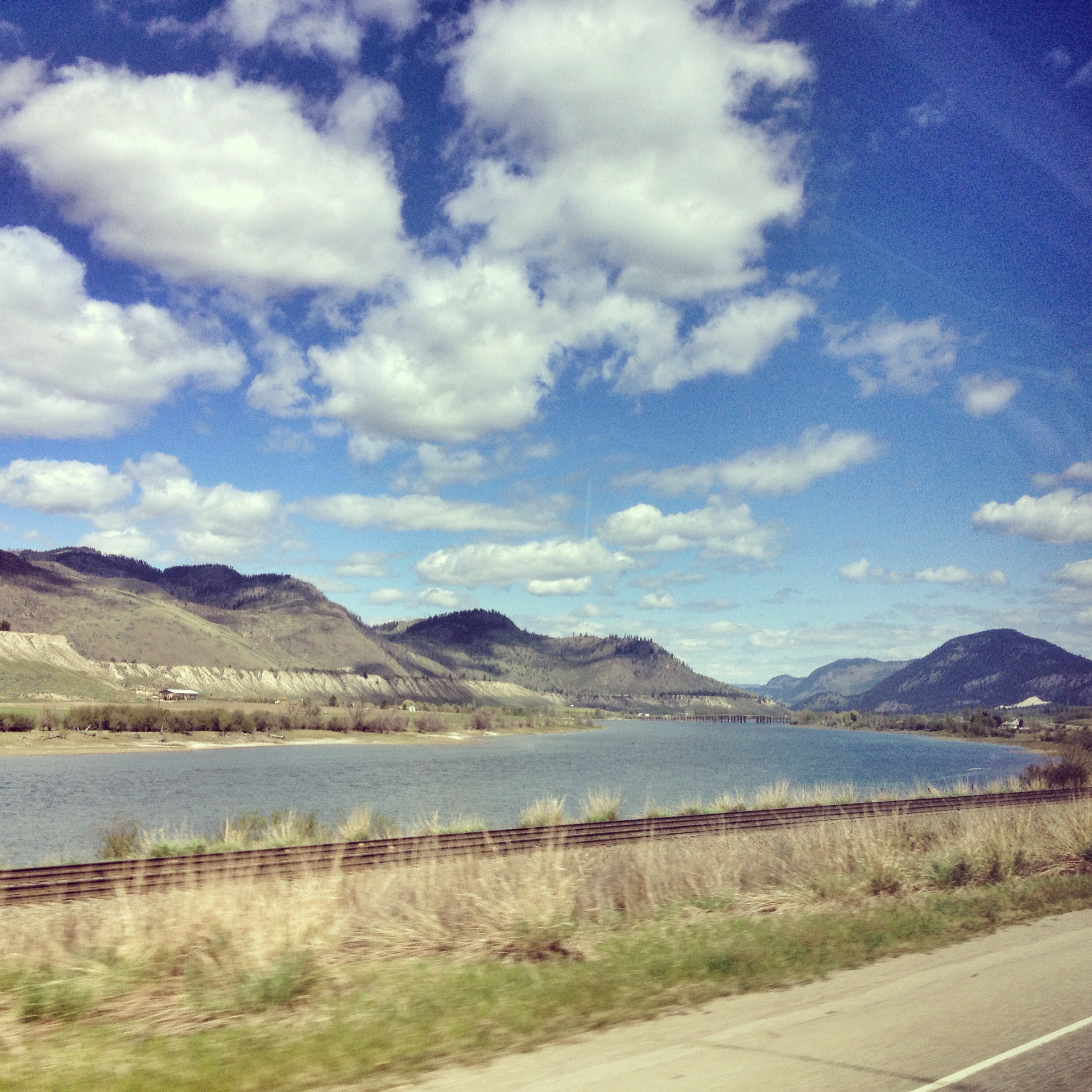
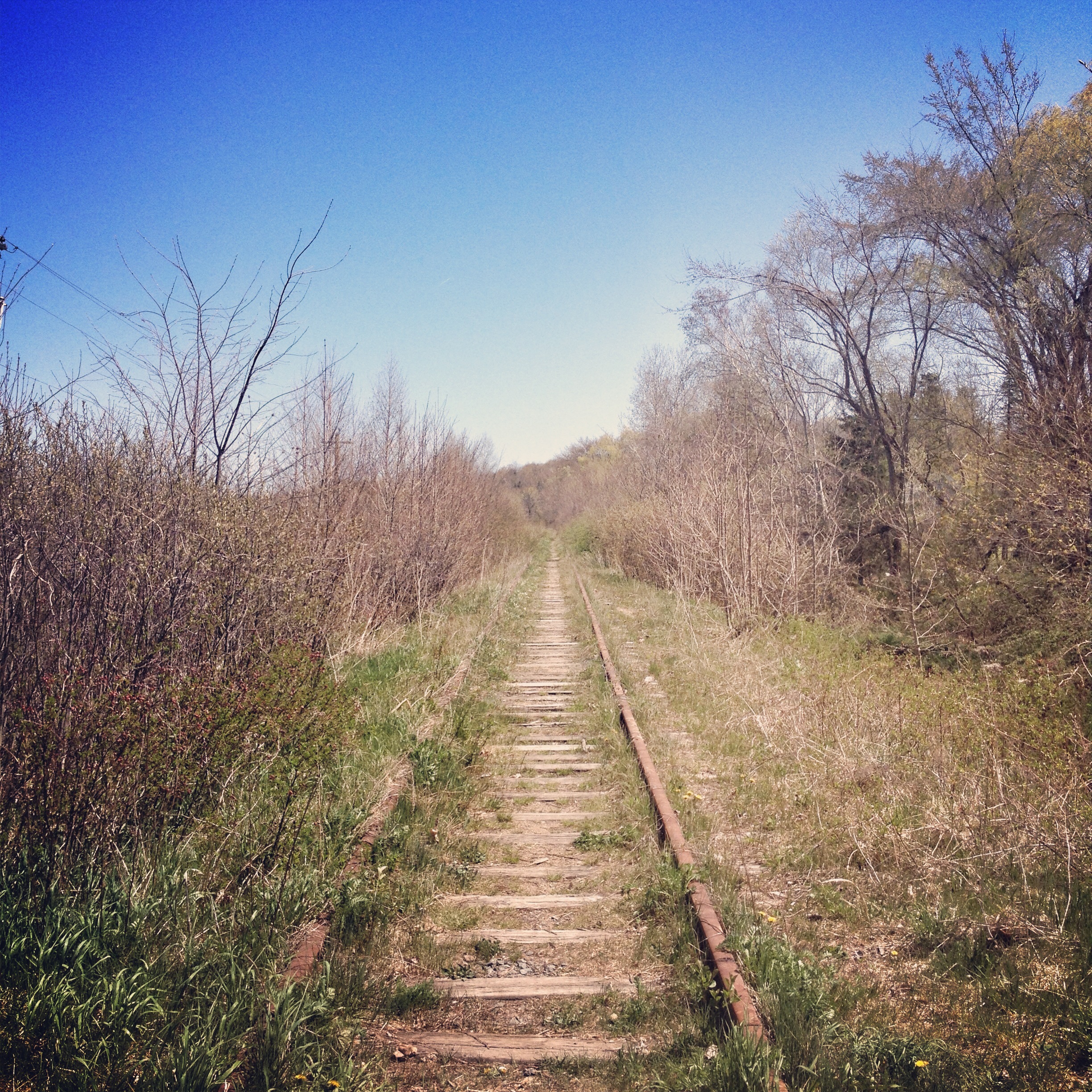
In the last few weeks, few months, year, I’ve been on a journey. In some ways both of these pictures are representative of that for me; one directly and the other indirectly. Both of these photos were taken this month (if you follow me on instagram, you’ll have seen these and other images from my adventures already) as I travelled around different parts of the country working towards this new adventure. To the left was a weekend trip I took to the Interior of BC, to a retreat centre in the Shushwap. To the right is train tracks in Wolfville, NS, where I went for a meeting of PWRDF‘s Youth Council.

It is exciting? You bet!

Am I a little nervous? Definitely.

I’m still waiting for some of the pieces to fall into place (really, there is only one more piece left) before I feel comfortable broadcasting to the world.

I think that this voyage of discovery is one reason I have been rather reluctant to post anything on here in the last year or so. I have been doing a lot of thinking and a lot of writing in the last twelve months. However much of it has been in aid of my own internal processing and not really for public consumption. When one is so engrossed in internal and personal discernment, there isn’t a lot of creative energy left over for generating different content for the world. When one’s head is in internal space, it is difficult to move outside of that in order to share, still in a meaningful way, thoughts in a public space. Thank you for respecting that, and I look forward to sharing more soon.

Soccer, Connections, and the Health of a Community

This was written for justgeneration.ca, the forum for youth engagement with the Primate’s World Relief and Development Fund, of which I am a part.

Image

The sun was setting as we walked along the road that went up and over the hill. As we wound our way through large, brightly coloured vacation homes, the road slowly deteriorated and gradually the tar turned to a dusty dirt track. Dodging cow droppings in the waning light, my self-imposed mission was to keep my feet as dust and dung free as possible. A difficult challenge given the road. Two-story homes turned to low thatch-roofed rondavels with a kraal (cattle pen) out front. Of course, as I dodged yet another cow wandering free, the cattle weren’t inside the kraal yet.

The view from the hilltop was magnificent: to the left, the Indian Ocean stretching out as far as the eye can see; to the right, the Keiskamma River wandering through undulating green hills dotted with coloured thatched houses. It was my last night in South Africa and we were going to watch the football.

The weekend before, I had been fortunate enough to road-trip to Port Elizabeth, a large city about three hours south, with three employees/volunteers at the Keiskamma Trust to watch the second night of Africa Cup of Nations action. After much deliberation, we decided to cheer for Ghana’s Black Stars over the rivals from the Democratic Republic of the Congo (DRC). After all, they had done well at the World Cup a few years previously and they had the best souvenirs. No sooner had we put our “I ❤ Ghana” headbands on than we were bombarded for photo opportunities by hundreds of Ghanaian fans, who had made the trip to South Africa.

It was a fantastic game and an incredible experience. I caught Cup fever and that is how I found myself climbing up the hill to the other side of the village from where I was staying; to watch the local boys, Bafana Bafana, play a match on one of the only TVs in town. The house with the TV belongs to one of the original community health workers employed at the Keiskamma Trust. The house is currently inhabited by the public health doctor who is living, working, and studying in Hamburg while she facilitates the delivery of health care in the community and surrounding region.

Begun in 2002, the Keiskamma Trust works through a network of community health workers to combat the high rates of HIV/AIDS in their corner of Eastern Cape. The number of stories I heard of people’s lives being changed simply through access to antiretroviral (ARV) medication would be too many to recount here. Stigma is still a difficult thing to overcome and HIV/AIDS is a challenging discussion topic for anyone, yet the Trust has done amazing work in their community. Through funding from PWRDF and CIDA (the Canadian International Development Agency), this work is now being broadened to include psychosocial programs. The psychosocial and health programs compliment the other programs the Trust already runs: art, music outreach, sustainable agriculture, community development, and education.

And so the sun went down on my last evening in Africa; I sat outside with friends, new and old, to eat dinner and revel in a South African soccer victory. As we leaned against the side of the hut overlooking the ocean and underneath the stars, I reflected on this community and my connection to it, on the change ongoing in the lives of people there, on the friendships I’d made in two short months, and on how to avoid the cow droppings as we walked the dirt road home in the dark night.

Friday Photo

Pretty much every minute I was not at work last week, I was at church. I spent all of Saturday morning at the Cathedral (left), my home place of worship and both a building and a family of people that I am coming to love very much, for a leadership development morning with others on the parish council. I spent all of Sunday morning at St John the Divine (right) where I spoke on PWRDF at both the 8am (insanely early) and 10am services.

A PWRDF Sunday

I case you were wondering what I preached this morning… (I’ve gotten a lot of mileage out of that placemat story!)

Given at St John the Divine, Victoria. Third Sunday of Advent: March 11, 2012. Gospel: John 2:13-22.

I remember my first encounter with The Primate’s World Relief and Development Fund (PWRDF). I was young, perhaps 11 or 12 years old, and what stands out are those placemats. We’ve all seen them… from coast to coast, many Anglican church potlucks have had those placemats covering the tables where we sit and eat together. But those placemats are not what gave me a passion for the Primate’s fund, nor are they what has kept me involved in it, nearly 20 years later… Rather it was the stories told by a passionate person in my parish who knew about and believed in the stories of what the Primate’s fund is doing around the world.

But more on those stories in a minute…

First, who am I and what do I do with PWRDF? In my day-to-day life, I am a counsellor with the Cool Aid Society. In my weekend life, I worship down the street at Christ Church Cathedral where I, amongst other things, serve on Parish Council. With the Primate’s World Relief and Development Fund, I am the youth council representative for the ecclesiastical province of BC and the Yukon. That is a fancy way of saying that my role is to bring the voices of youth in BC and the Yukon to the national board of the Primate’s Fund and then turn around and bring the stories of PWRDF partners to people, particularly youth, in the same region. I am not on the board, rather I am part of youth council: a separate and autonomous entity composed of a dozen youth from across this country who are passionate about international relief and development, and social justice. Youth who both create programs and resources for Canadian Anglican youth and who tell the stories of PWRDF to youth.

Why PWRDF? For one thing, it is homegrown, beginning as an Anglican response to disasters within Canada and over the last fifty years spreading to have a national and international relief and development focus.

But what I love about PWRDF is the model we use to operate. We don’t import “western experts” into countries and tell locals how best to fix the problems in their regions and communities. We don’t spend precious resource monies on a large staff or on bringing products overseas. Rather, we partner with organizations who are already working on the ground in their own communities and support and resource them in continuing the work they are already doing.

And people like myself volunteer to tell their stories…

In relief efforts, our partnership might look like providing the funds for an organization to buy precious food to be distributed in drought-stricken or famine-ridden areas.

In development, it looks like translating documents into indigenous languages to help a people group re-learn the skills to grow and harvest their own crops rather than rely on corrupt corporations who will under-pay and overwork them.

Or it may look like providing the start-up money for a women’s microcredit organization, like the one we heard about this morning in Mozambique. In fact, with that organization in Mozambique, one woman who first entered with just a cow and an idea to produce and sell milk to other villagers to support her family now owns not only a herd of cattle but also the land they graze on and she is able to employ many of her neighbours.

In relief, it looks like the villages in Kenya that I visited in 2009. There the Canadian Foodgrains bank, of which PWRDF is a member, was involved in distributing food to thousands of individuals who were affected by the devastating East African drought. We travelled around regions of the country, bringing giant bags of beans and maize and jugs of oil: enough supplies of food to feed a family of eight for a month. In each village we went to, we sat down with a group of people from the village to hear their stories. In each village, the stories were heart-breakingly similar: the rains had not come. Yes, there had been sprinkles here and there, but the big rains, the rains that nourished the ground and gave life to growing crops, had not come for five, six years. Crops would not and could not grow. The livestock that had not been sold, given away, or eaten, simply sat in the shade of scraggly trees all day, as there was no grass to feed on.

We met a woman, 34 years old, the 4th wife of her husband, with eight children of her own – who could finally feed her children, including the young one still breastfeeding. In another village, a man tearfully told us of how grateful he was for the food relief for his village because, as he said it, if we had not come, some of the people in the village had found “chemicals” to use to end their problems as they could not bear the shame of being unable to feed their families.

Yet it was not all tales of woe. One village in the Mt Kenya region refused to roll over and let the drought win. They did not want to receive food relief… While we sat and talked, they spoke of the projects they wanted to do to develop their village so that they could better withstand another drought. So we talked about how to set up a “food for work” program in which we provided food and resources for irrigation and they, in return, would create an irrigation project in their village so that when the rains did come, they would be able to capture and save as much rain as possible for as long as possible.

In relief and development it looks like our partnership with the Organization of Eelam Refugee Rehabilitation or OfERR, an Indian/Sri Lankan organization that PWRDF has partnered with for 30 years. OfERR works with refugees of the Sri Lankan civil war who have taken up residence in refugee camps in South India. They not only help with getting identification documents for the refugees and skills retraining, but they provide community support to the Sri Lankan Tamil refugees living in India. When the 2004 Asian Tsunami hit India and Sri Lanka, OfERR was able to assist in the relief and rebuilding of the communities in which they lived, giving back to a place that had accepted them as refugees. This past week, a priest of our diocese and a friend of mine left for two weeks in India and Sri Lanka. He goes with a number of other Canadians associated with PWRDF to spend time with OfERR, supporting their work and, if everything going according to plan, to bear witness to one of the first groups of the 100,000 Tamil refugees as they return to their home in Sri Lanka.

In development, it looks like the Keiskamma Trust, a PWRDF partner organization in the Eastern Cape region of South Africa, an area of South Africa hardest hit by HIV/AIDS. Founded by an artist, who also happens to be a medical doctor, the Trust provides medical support to individuals and families struggling with HIV/AIDS. I had the opportunity to meet the founder and director of the Trust at PWRDF’s board meeting last fall. Her vision is extraordinary: knowing that health is more than just physical health, she has expanded the original medial clinic to include both a women’s arts collective and a children’s music academy. The medical centre works at providing health care and medications to a group of people so frequently shunned and stigmatized in their society. The arts collective brings women together to create masterpieces of fabric arts that have been exhibited around the world. The music academy gives the children something bigger than themselves to be a part of and has given them the opportunity to tour and play for large audiences in cathedrals and on game reserves throughout South Africa. Not only do I know the stories of these individuals through meeting the founder and director, but also my sister has been in South Africa since August teaching music at the academy.

Reflecting back to words we heard read this morning, the Gospel reading gave us quite a different picture of Jesus than we typically see on Sunday School flannel boards or pictures mounted on the wall. In this story, Jesus goes into the Temple in Jerusalem and uses a whip to drive out all of the vendors and money-changers. Wow. To put into perspective what these guys were doing… it would be like you coming to church this morning and having to pay exorbitant fees because you needed to change your Canadian dollars into American dollars in order to buy the things you need for worship: your leaflet, your hymn book, or your prayer book. Ridiculous. Completely Unjust. But that is what was going on.

If we look around us, there are injustices everywhere. We have before us a model of Jesus taking action and, to use the words of one of the Marks of Mission: “seek[ing] to transform the unjust structures of society”. In our gospel reading, Jesus is actively challenging, in a very visible and somewhat violent way, the structures of his society that were creating injustice.

Another one of the Marks of Mission is “To respond to human need by loving service.”

Human need is all around us and through PWRDF we have an amazing vehicle for acting on that need. We are called to respond and we are constantly challenged in scripture to follow the example of Jesus.

For me, a big part of that is the work that I do with PWRDF and what I would challenge you with today. I’m not saying that everyone has to go out there and start overturning tables, though sometimes that might work, but what can you do, what can I do, to follow the example of Jesus, to work against injustice and to respond to real human need with what resources we have at hand.

Because I have seen that together we do make a difference. We can make Another World Possible.

Amen.

PWRDF From the Pulpit

Actually, I think it will be from the lectern, but pulpit has alliteration going for it.

I’m preaching at the church of St John the Divine, Quadra this Sunday. I’m there as a part of their month of talking about the work of PWRDF so I will be sharing some of the stories of the Primate’s Fund and generally telling people why it is a good idea that they support it.

If you’re in town and have nothing to do Sunday morning, come on down for either the 8am or 10am service. I will likely be sticking around after each service as well, drinking coffee and answering questions.

Our Loving Creator

Adaption of the Lord’s Prayer written at the 50 Leaders weekend last weekend. It was a collaborative effort done over a space of a couple hours during our spiritual practices downtime.

Our loving creator, rock of our salvation,
Holy be Your beautiful name,
Your dwelling place come,
Your love be known
By everyone on earth.
Give us today the things we need,
and forgive us our faults,
more than we forgive those who offend us,
and journey with us away from temptation,
and protect us from harm.
For blessed is the space,
and the capacity and the delight,
beyond earthly time.
Amen.

justgeneration.ca